Our lives are both personal and collective unfolding stories.
These stories constitute the foundations of all our relationships. Virtually all our communications involve hearing and telling stories. Sadly most people are destined to go to their graves without telling and in particular recording their stories in part and specially in totality.
The Birth of the “Co-Biography”
– A Holistic Life Narrative
In 2015, I set out to compile my life story but quickly realized that a conventional written biography or autobiography could never truly reflect the holistic philosophy, principles, and practices that have profoundly shaped and guided my life. Seeking a more authentic expression of my journey, I coined the term “Co-Biography”, a neologism that embodies the holistic, iconoclastic, and maverick nature of the life path I have consciously chosen to live. Rather than producing a traditional written book or manual, my vision was to create a “multimedia smorgasbord” narrative, a unique, integrative project that merges my personal autobiography with a short conventional biography authored by a professional biographer. This innovative format allows for a more dynamic and multidimensional portrayal of my life’s essence and evolution.
A grand gesture of gratitude and grace
The Art of Remembering, Reflecting, and Giving Thanks
I viewed it essentially as a GRAND GESTURE OF GRATITUDE AND GRACE to God, Life, Source — or whatever term you might prefer.
It would contain a plethora of anecdotes, songs, interviews, stories, letters, articles, excerpts from movies, professional and popular publications, highs and lows, turning points, memories, mistakes, achievements, videos, music, and photographs. Like my life itself, I wanted it to be large, bold, creative, factual, courageous and totally authentic. I was given the invaluable advice to capture my Co-Biography in a new website format to replace the AAHALearning site I had used effectively and successfully for many years. I view this as my final personal and professional life assignment.
Using this format would incorporate holistic indexing and cross-referencing, allowing quick and easy access to virtually any moment, memory, chapter, experience or episode in my life.
The urgency of telling our stories
the tragedy of silence
In the process of joyfully immersing myself in shaping, cutting and polishing past experiences, memories and happenings, I have come to the increasing conviction that going to one’s grave without, in some or other way, telling and sharing our story is arguably an act of slothfulness, a poor excuse, an intra- and interpersonal tragedy and a significantly missed opportunity both personally and collectively.
Sadly, the common practice of recorded life stories has been largely restricted to high-profile individuals, heroes or celebrities, ranging from monsters to angels and everything in between. Publicity, newsworthiness and perceptions of what is important have been the driving factors. Few would dispute that storytelling has the potential to entertain, enthral, amaze, shock, inspire and teach. I really believe that “stories” patiently await being told and shared and that everyone has value and benefit in some or other way.
A question you may like to ponder before diving into my life is this: How much do you REALLY KNOW AND UNDERSTAND about the what, how, when, where and why of the life and times of just ONE PERSON — dead or alive — who you have known, loved and admired?
My bet is that, like me, you will have to admit that at best, you know very little about anyone, even those with whom you may have shared a lifetime.
How I would have loved and valued it if my beloved mother, estranged father and esteemed mentor, Professor Phillip Tobias, to name just three significant people in my life, had done what I am doing now. I want to weep knowing that they all went to their graves, as most do, with their stories largely untold, unshared and shrouded in secrecy. I and Everyone else whose lives were touched and shaped by these three people are almost certainly the poorer for this. Arguably, a detailed sharing of our life story should be at the top of our bucket lists.
I am committed to not repeating the untold stories of those who have gone before me.
Four convictions forged in the work of remembering
Compiling my Co-Biography has convinced me of four things:
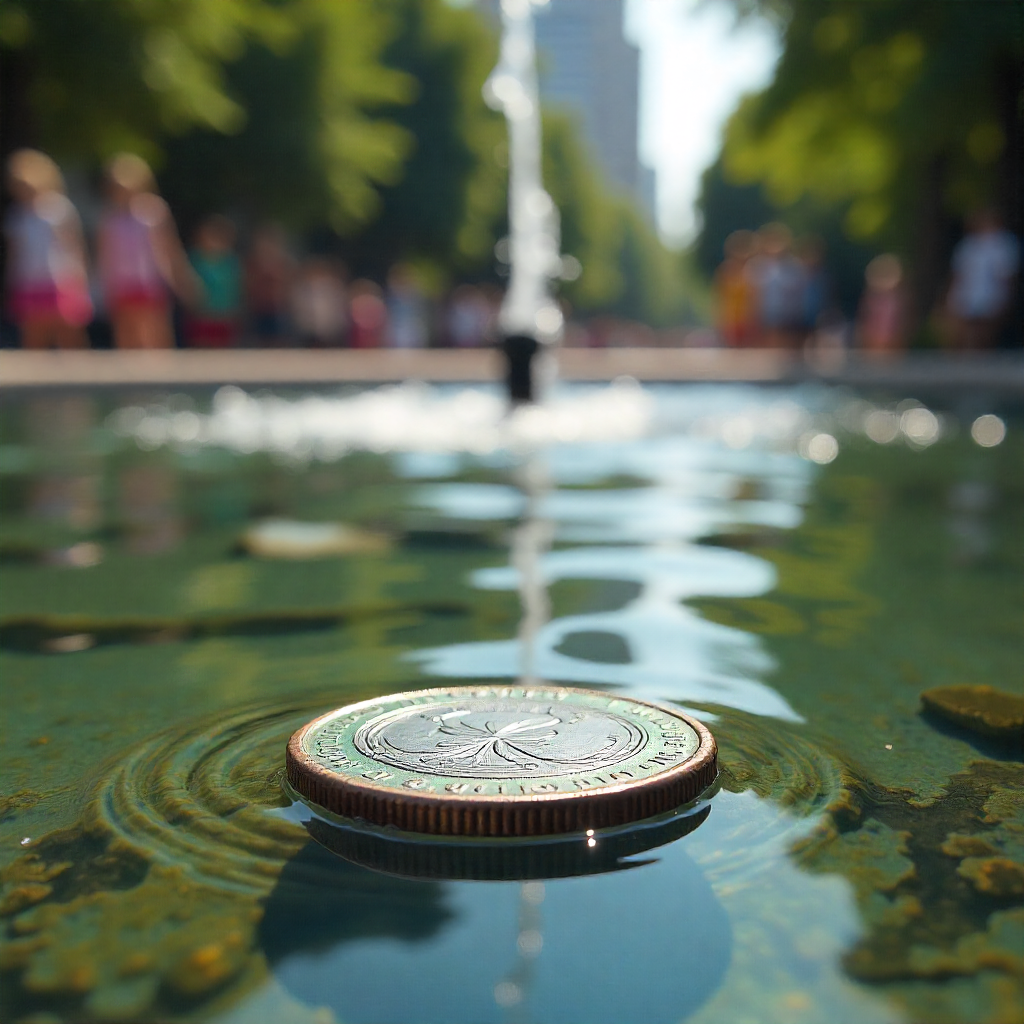
Firstly, that LIVING by the grace of an omniscient, omnipotent and omnipresent Divine Intelligence — gifted to us from God, Life, Source or whatever you perceive this to be — constitutes one side of our “earth-walk coin.”
Secondly, the other side of the coin is our reciprocated gift back to Source. Ideally this should be characterised by acts of love, kindness and service to ourselves and everything in our sphere of influence.
Thirdly, every significant person who has crossed my path has been a colour-and-learning-filled thread in the tapestry of my life, for which I am hugely grateful beyond words.
Fourthly, compiling one’s life story is a very effective way of preparing for the inevitable process of entering the arc of our own disappearance — or, put another way, conscious dying.
Storytelling can entertain, enthral, amaze, shock, inspire and teach. It is worth remembering that every life, with its many experiences and happenings, is actually a multitude of different stories. I believe every story patiently awaits being told and shared; the only debatable question is the intra- and interpersonal “value add” of telling and hearing a story.
I am committing myself to not being silent about my life stories as so many others have been and will be.
Autoethnography
the method behind the memoir
Autoethnography refers to a specific methodological research approach that incorporates a systematic analysis of personal experience within a particular cultural context. An autoethnographer is first and foremost a communicator and storyteller. They strive, struggle and attempt to figure out — in greater detail and depth — their triumphs and challenges, how they lived, what they did and should have done, and how to live in the present and future.
In essence, autoethnography is a story that re-enacts experiences through which we seek to discover meaning. When this is achieved, the writer is able to more deeply and expansively understand and appreciate many past life experiences and adventures.
For example, when faced with the death of a loved one, we might initially wonder how to continue living and even question why God allowed it. Over time, looking back, we may understand that through hardship we became stronger, more independent and resilient, and/or grew closer to family. With these realizations we have made sense, and most importantly, found meaning — and it is in this unfolding revelation that autoethnography occurs.
The autoethnographer and the audience have equal weight. Through the writer’s portrayal of self, an embodied experience is created for both writer and reader. There is an inward and outward ethnographic exchange: the reader may inwardly experience the author’s subjectivity and then respond outwardly through thought, feeling and behaviour.
Autoethnography is also used in documentary films, but it differs from documentary in that its subject is the writer or filmmaker. Because an autoethnography typically relates to the subjective life experiences, thoughts, views and beliefs of the storyteller, it is often rife with bias and image manipulation. Unlike film documentaries, autoethnographies do not usually claim objectivity.
I would like to point out, however, that my scientific and research background compelled me to create a different and alternative autoethnography. Firstly, it will be in MULTI-MEDIA format and not just a written report. Secondly, it will strive to balance and integrate factual cognitive accuracy and objectivity with radically authentic and honest, no-holds-barred subjective truth-telling.
Why I wrote this
a personal, final assignment
In conclusion, let it be known that this Autoethnography has been unashamedly compiled largely for myself. I have spent more than six years putting this “big-picture” jigsaw puzzle of my life together. In this very personal and passionate final major life assignment, I have learnt more than I could ever have imagined.
Unquestionably, my biggest and most humbling insight was this: I initially believed my life story would be a compilation of many varied pieces I had personally and largely independently created and designed. What I discovered, however, was different: my life had been hugely influenced, shaped and directed by invisible forces such as God, destiny and providence, and particularly, and very significantly by PEOPLE who had crossed my path. Without them, I could not have lived; with different people, my life would have been totally different. Only when I had this epiphany did I understand with crystal clarity why I had to write my autoethnography.
Firstly, as a heartfelt, grand gesture of gratitude to GOD, LIFE or SOURCE. Secondly, in deep appreciation and acknowledgement for the many people and experiences that significantly shaped, guided and supported my life. Thirdly, for the way in which all of the above enabled me to discover and fully embrace the meaning and purpose of my short earth-walk. Fourthly, for the totally unattached possibility that anyone interested in hearing my story could in some way be inspired, enlightened and/or benefited.

Memories
the invisible presence that makes us human
This thought-provoking North American Indian teaching story is a potent reminder to us all of the critical importance of memories and their quintessential role in our human beingness.
If it is true that every person has a huge quantifiable past that is larger than anything in their present lives, and if we don’t remember the paths we have travelled and how we came to the place we are now — both as a society and especially as an individual — WE ARE LOST. This raises a question worthy of our consideration: “Is an unexamined life worth living?”
Examining our life requires time, energy and focus. Some might argue that rather than examining our lives we should get on with living them, given our short earth-walks. Examining our lives is qualitative while living our lives is quantitative. In my opinion we need a holistic balance between the two in order to optimise our living, learning, loving, working and playing. This autoethnography is my heartfelt attempt at doing just that.
Any and every life experience has a birth, life and death. When an experience ends, it is replaced by an ‘absence’. From this absence emerges an invisible ‘presence’ that is actually a memory or echo of a past experience. Without memories that might be totally or partially lost through accident or disease, we function merely as biological entities and not as human beings. Without our memories, a significant part of our humanity ceases to exist.”
If we fully grasp the significance and value of memories, we would be prepared to go way beyond the common and superficial practices of occasionally looking at photos in albums, watching family videos and retelling memorable stories. Skillfully and expansively exploring and analysing our memories or living presences can catalyse deep healing, gratitude and understanding of our past, present and future.
An invitation
the invisible presence that makes us human
I am hoping and trusting that this explanation will get you pondering the huge benefits of writing your own life story. One thing you might need reminding of is that if our paths have crossed, irrespective of how long or short. YOU in some other way have shaped and influenced me; for this my cup runneth over with appreciation and gratitude.
— Bruce Copley