The fire of life burns through our stories, connecting every human heart.
Every life is a flame — an unfolding story that lights our shared humanity.
Our lives are unfolding stories that shape who we are and how we connect. These personal and collective narratives form the foundation of all relationships, reminding us that communication itself is storytelling. Yet, far too many people leave this world without ever telling or recording their stories, silent legacies of untold wisdom, love, and experience.

The Eternal Teacher
INTRODUCTION
For over 1.5 million years, fire has been our greatest teacher, the element revered by all peoples, in every land and every age. The Celts tended a sacred flame that burned for a thousand years. The Egyptians, masters of early science, used friction to summon fire as far back as 10,000 B.C.
Among the Cherokee, fire is not merely a tool but a sacred being. Their legend tells of a time when the Creator withdrew the “inner fire” from a high priest who misused its power during war & later returned it to the people as a divine gift. To this day, Cherokee families cleanse their hearths each year and rekindle their home fires with a coal from the original flame — a living symbol of renewal, continuity, and reverence.
For countless Indigenous cultures, the hearth has always been the heart of the village — a place of teaching, nurturing, and belonging. Fire connects us to the ancestors, to the Earth, and to each other. It forges respect for the natural world and rekindles the sense of unity that modern life too often extinguishes.
Fire transcends all boundaries. It is both Grandfather and Teacher — ancient, impartial, and wise.
Perhaps it is fire itself that can help temper and redirect humanity’s energies toward a more harmonious path. The Old Ways are speaking again. The question is — are we ready to listen?
THE ART AND SCIENCE OF FIRE MAKING
THE ORIGINAL FIRE
USING THE ORIGINAL FIRE TO FORGE FRIENDSHIPS AND
BUILD COMMUNITY AMONGST SOUTH AFRICANS
Timeless Lessons for Learning, Working, and Living with Passion and Purpose
An unforgettable, ancient, and mysterious experience awaits — a chance to step back in time and experience what our ancestors valued above all: the Original Fire. Participants are given the opportunity to
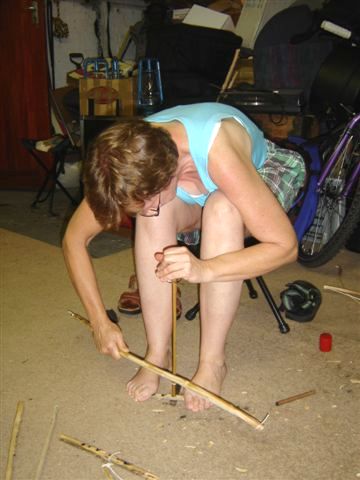
birth their own fire using the ancient fire-stick technique.
In this way, you come into direct contact with the mother of all elements: FIRE — primordial, mysterious, and powerful. Fire becomes your teacher, offering lessons that challenge, surprise, and delight. Reaching deep into mind, body, and spirit, these lessons provide valuable insight into what it means to be
forged in the fire and furnace of life.
Dr. Bruce Copley is an internationally acclaimed holistic educator and former professor at Wits University, holding six degrees and a medal for scientific research. He provides playful, transformative experiences designed to reintegrate the five faculties that grant us dignity as human beings
physical, mental, social, emotional, and spiritual.
Through exploration, fantasy, adventure, experimentation, creativity, and innovation, participants learn that while mastery helps navigate the world, pure play belongs to freedom and aids in authentic self-expression.
A South African Perspective on Transformation
As a South African, I have been privileged to witness a process that few (including myself ) ever believed possible: the bloodless transformation from a half-century of Apartheid into a democratic society that has become a beacon to the world.
Nelson Mandela, through his extraordinary example of servant leadership, was forged in the furnace of oppression that discriminated against all people of colour in our country. His life stands as a living testament to the alchemy of fire, that through trial and suffering, something purer and more luminous can emerge.
Over decades of consulting internationally, I have observed that the most profound human learning often arises not from ease or comfort, but from the crucible of challenge, loss, and renewal. The phoenix rising from its ashes remains one of humanity’s most enduring archetypes, a symbol of our innate capacity for transformation.
Perhaps this is why my corporate Fireshops have found such resonance among organisations in South Africa and beyond. The experience of creating one’s own living flame using the ancient bow-and-stick friction method awakens something deep within, an ancestral memory that transcends age, culture, and intellect.
Time and again, I have watched seasoned executives become wide-eyed children again as they coax fire from wood and breath, rediscovering a spark that has always dwelt within them.
By Dr. Bruce Copley, Aaha Learning, Cape Town, South Africa

Fire
A timeless symbol an ancient ritual
A MODERN / ANCIENT FIRE CEREMONY
Fire connects us to the past, forges a reverence for the natural world and brings back feelings of connectedness that have been lost.
A modern yet ancient fire ceremony, inspired by a North American prophecy known as the Journey of the Sacred Fire, has now found resonance among people across the world. The prophecy speaks of seven fires, each representing a particular era in humanity’s unfolding journey. It is said that if humankind chooses the right path, the Seventh Fire will kindle the Eighth and final Fire — an eternal flame of peace, love, and brotherhood.
Central to this ceremony is the creation of a coal or earth bundle, formed from the glowing coals and ashes of a fire around which the story of the Seventh Fire is told. Into this sacred bundle are added natural elements such as sand, leaves, and wood from the surrounding area. It is then carefully wrapped in cotton cloth, bound with cotton string, and placed into a new fire as the story is retold — continuing an unbroken chain of renewal and remembrance.
Since 1995, this ceremony has been formalised by TEAM: Keepers of the Fire at Northeastern Illinois University in the United States. Participants from around the globe are invited to share their experiences of lighting or witnessing a coal bundle fire by contacting Daniel Creely
(d-creely@neiu.edu). Each ceremony is recorded on a world map of Sacred Fire gatherings — a growing constellation of coloured pins representing every continent, a testament to the universal power and timeless relevance of this simple yet profound ritual.
To sit around such a fire is to rekindle a primal connection — to others, to nature, and to the unseen energies that bind all life. The coal bundle becomes a symbol of our collective consciousness, linking each participant to every other who has shared in this ceremony. Like a pebble dropped into a still pond, the fire sends out ripples of love, harmony, brotherhood, community, and hope — energies that quietly transform the world.
The discovery of fire and its use as a tool was undoubtedly the most significant event in the history of Homo sapiens. While many know that fire was first created by friction, very few have ever witnessed the miraculous transformation of wood into flame. This deceptively simple skill — now progressively vanishing even among indigenous communities — is far harder to master than it appears.
As most aspiring “fire makers” quickly discover:
A campfire… no matches! Just take two sticks, rub them together for half an hour, and presto… hot, very hot, but no fire.
This captures perfectly the patience, skill, and quiet wonder required to engage with one of humanity’s most elemental tools.
the ORIGINAL FIRE kit
A unique, handcrafted Fire Kit that uses the ancient wood-friction method, a 1.5-million-year-old discovery — to create a genuine Original Fire.
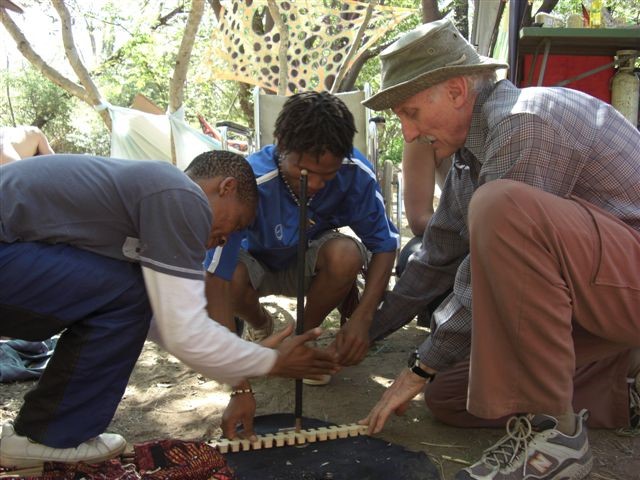
Each kit contains six carefully selected components, along with detailed, step-by-step instructions that ensure success, even on your very first attempt.
Using the bow-drill method, it can involve one to five people and is capable of producing over fifty Original Fires.
The kit also includes tips on sourcing your own natural fire-making materials, together with links to international fire-making networks for those wishing to explore further.
Through this experience, you are invited to rediscover the alchemy of wood to flame — to witness and participate in one of humanity’s greatest breakthroughs: the moment our ancestors first brought fire to life.
Reconnect on a primordial level with fire, the Mother of all elements, the sustainer of all life through the Sun’s energy, and the driving force behind our modern world through electricity.
Use your Original Fire to enrich and sanctify meaningful moments, transforming them into mindful, memorable experiences.
Perfect for:
Birthdays • Weddings • Housewarmings • Roof Wettings • Romantic Evenings • Spiritual or Religious Ceremonies • Funerals • Sweat Lodges • Braais • Bonfires • Drum Circles • Fire Dances • Festivals • Company Launches and Celebrations.
A LEARNING ADVENTURE
The Original Fire kit
For those adventurous spirits who would like to successfully create their own original fire, a unique hand made fire kit is now available from Aaha Learning, a South African based consultancy.
- Make dozens of original fires using the 1.5 million year old “ stick friction” method. Detailed step by step instructions that ensure success even on the first attempt.
- Two versions of the kit are available : Beginner kit (Bow technique) and Full Kit (Bow plus Hand Drill methods)…Can be done by 1 to 5 people even by children as young as 6 years old.
- Use the ORIGINAL FIRE to enhance, ceremonialise and sanctify special occasions, turning them into memorable and mindful experiences! Ideal for Birthdays, Weddings, House Warmings, Roof Wettings, Romantic settings, Religious/Spiritual Festivals, Funerals, Sweat Lodges, Braais, Bonfires, Drum circles, Fire Dances, Firework displays, Company launches/celebrations, etc
Fire connects us to the past, forges a reverence for the natural world, and brings back feelings of connectedness that have been lost.

FIRE AND THE ELEMENTS
THE ART AND SCIENCE OF CALLING DOWN THE SUN
In the modern world, we take much for granted and rarely stop to ponder and think about what lies behind our frenetic existence. The 5 elemental forces of water, air, earth, wood and fire have always been revered by indigenous people. While all 5 elements are inextricably connected and interwoven, the element of FIRE is at the source of all the others.
Sun or fire energy is the material catalyst for all and every form and expression of life on this planet and the driving force of the modern world (electricity). Even the human body runs on an internal fire known as metabolism… in a nutshell, the world runs on fire.
The discovery of fire and its use as a tool was unquestionably the most significant event in the history of Homo sapiens. While many people know that fire was originally created by generating heat through friction, only a handful of people on this planet have ever practically witnessed the miraculous and mystical birthing or alchemy of wood to fire.
This seemingly simple skill that is progressively dying out even among indigenous people throughout the world is deceptively complex and difficult to master.
The following statement eloquently captures what the large majority of aspiring “fire makers” discover when attempting this process:
“ A campfire…..no need for matches !……just get 2 sticks and rub them together for half an hour and hey presto…..you will feel hot, very hot but no fire .”
Lessons from the Primal Fire
LESSONS FROM THE ORIGINAL FIRE AND WORKPLACE APPLICATIONS
FIRE offers timeless lessons and guidelines for effective learning, living and loving. What follows are
a number of fire lessons, metaphors, and workplace applications.
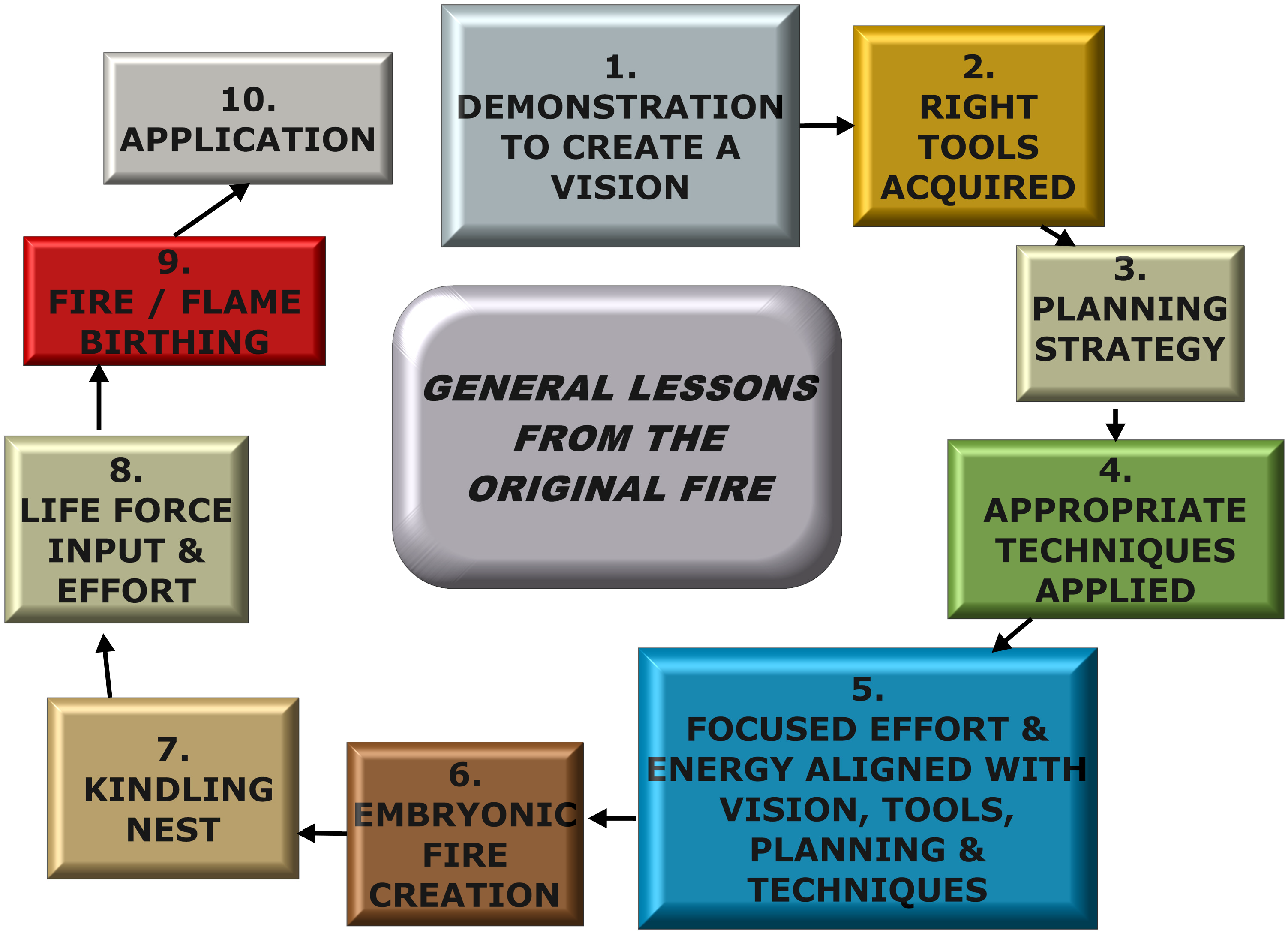
- Every time you create the ORIGINAL FIRE as your ancestors did 1.5 million years ago, please do this with awareness, respect and responsibility. While you may be showing/teaching others or lighting a special fire, I urge you to always use the activity as a profound reminder of the unique original fire that burns in you. It is this internal fire that fuels your life with passion, meaning and purpose…..in a nutshell it is what gets you out of your bed every morning !! For those of you who may be interested in ceremony/ritual, the original fire can be very meaningfully integrated into communal singing (carols by candle light), fire walking, fire dancing, affirmations, mantras, and meditation/prayer sessions.
IN ORDER TO LEAD EFFECTIVELY YOU MUST NOT ONLY BE “FIRED UP “ YOURSELF BUT HAVE THE ABILITY TO SPARK/IGNITE THROUGH ENCOURAGEMENT AND SUPPORT, THE FIRES OF YOUR SUBORDINATES AND COLLEAGUES.
LIKE FIRE THAT IS THE ULTIMATE CHANGE AGENT, YOU TOO ARE AN AGENT FOR CHANGE IN YOUR WORKPLACE. YOUR GOALS WHATEVER THEY MAY BE ARE ONLY GOING TO BE ACHIEVED THROUGH THE FIERY PASSIONS THAT BURN IN YOU !! YOUR FIRE IS UNIQUE. IF YOU ATTEMPT TO BE LIKE SOMEONE ELSE, WHO IS GOING TO BE YOU ?
- To successfully achieve anything in life, we require the right TOOLS. In the case of the original fire, this involves perfectly matched male and female woods. Sometimes you have to create or obtain your own tools, but what is important is that they can get the job done.
MAKE SURE YOU HAVE THE RIGHT TOOLS TO DO THE JOB ASSIGNED TO YOU. A CRITICALLY IMPORTANT TOOL THAT YOU NEED TO ACQUIRE AND KEEP IN GOOD WORKING ORDER RELATES TO YOUR ABILITY TO COMMUNICATE AND RELATE TO YOUR FELLOW HUMAN BEINGS.
- Another important aspect for creating the original fire is TECHNIQUE, and as you may have discovered, until you get this right, it is impossible to succeed.
IT IS OFTEN SAID THAT PRACTICE MAKES PERFECT, BUT THIS IS INCORRECT…ONLY THE RIGHT PRACTICE MAKES PERFECT !! TECHNIQUE CANNOT BE LEARNT FROM A BOOK OR A LECTURE BUT ONLY THROUGH DIRECT PRACTICAL APPLICATION. CULTIVATE THE HABIT OF ASKING OTHERS, ESPECIALLY THOSE IN YOUR INNER CIRCLE, TO GIVE YOU HONEST AND CONSTRUCTIVE FEEDBACK ABOUT THE EFFECTIVENESS AND APPROPRIATENESS OF YOUR WORDS, PROMISES, AND ACTIONS.
- Committed and focused work is essential in order to create the desired friction, smoke and wood dust. Many of you demonstrated this, plus the ability to learn from your mistakes while making the original fire.
SINCE FAILURE IS COMMONLY VIEWED AS A BAD THING, WE TRY TO AVOID IT AT ALL COSTS. WHEN WE DO FAIL, IT USUALLY CAUSES US PAIN, EMBARRASSMENT AND STRESS. IF YOU ARE NOT MAKING MISTAKES, THE CHANCES ARE YOU ARE PLAYING IT SAFE. CREATE IN YOURSELF AND OTHERS IN YOUR SPHERE OF INFLUENCE, OPPORTUNITIES FOR STRETCHING YOUR BOUNDARIES, TRYING NEW THINGS AND MOST IMPORTANTLY, USING FAILURE AS A TEACHER RATHER THAN A MASTER. ..THIS IS A WONDERFUL WAY TO ENERGISE YOURSELF AND OTHERS.
- Creating the fire ember/coal is the first major objective or vision of the original fire experience. As outlined above, obtaining the ember requires the right tools and techniques, focused work and application, perseverance and teamwork. In many ways, the ember is like an idea or vision we conceive that has much potential but is both vulnerable and fragile. The ember is really an “embryonic fire”, and it requires nurturing and protection in its stage of gestation.
THIS ALSO APPLIES TO ANY VISION OR GOAL YOU MAY HAVE IN YOUR PERSONAL OR PROFESSIONAL LIFE…..IN THIS STATE, WE SHOULD BE ESPECIALLY CAREFUL NOT TO INHIBIT, RIDICULE OR RESTRICT SOMETHING THAT MAY LIGHT UP OUR LIVES AND CONSTITUTE A REALLY BRIGHT IDEA. HISTORY SHOWS THAT THE LARGE MAJORITY OF TECHNOLOGICAL BREAKTHROUGHS AND DISCOVERIES WERE INITIALLY RIDICULED….I SHUDDER TO THINK HOW
MANY WONDERFUL VISIONS AND IDEAS HAVE BEEN BRUSHED ASIDE BY PEOPLE AND SYSTEMS WITH LITTLE OR NO VISION AND CREATIVITY. ACTIVITY ENCOURAGE OTHERS TO PUSH THEIR BOUNDARIES AND LIKE FIRE, BE AGENTS FOR CHANGE, TRANSFORMATION AND GROWTH. REMEMBER THERE ARE ONLY 3 KINDS OF PEOPLE…..THOSE WHO MAKE THINGS HAPPEN, THOSE WHO WATCH THINGS HAPPEN AND THOSE WHO SAY, WHAT HAPPENED?
- The next part of the process requires that we place the ember onto a soft bed of dry kindling material so that it may be transformed into a flame. It is only by creating a safe, “womb-like” environment that the fire can be birthed.
IF YOU ARE IN A LEADERSHIP ROLE, IT IS IMPORTANT THAT YOU PAY PARTICULAR ATTENTION TO FACTORS BOTH WITHIN AND OUTSIDE YOUR CONTROL THAT IMPACT THE QUALITY OF YOUR WORKPLACE ENVIRONMENT. WITHOUT THIS IN PLACE, HARD WORK, HONOURABLE INTENTIONS AND GREAT IDEAS WILL BE SERIOUSLY COMPROMISED AND OFTEN RUINED… BEING PROACTIVE IN THIS RESPECT CAN MAKE ALL THE DIFFERENCE.
- In this final step, we need to use the air in our lungs or our “life breath” to literally and figuratively breathe life into the ember and transform it into the original fire or flame. As in the creation of the ember, this step also requires focused work and attention to detail. Blowing too forcefully or too softly will not produce a flame, and the entire process will need to be repeated, as a number of you discovered for yourself. In birthing the flame, we have to contend with smoke that is a necessary part of the ignition process. It can seriously hamper and obscure our vision, interfere with our ability to breathe and blow properly and even extinguish the ember/flame.
BEING PREPARED TO DIG DEEP INTO YOUR RESOURCES AND REALLY GIVE OF YOURSELF, GREATLY ENHANCES YOUR ABILITY TO GET THE JOB DONE. THIS IS ALSO A CHARACTERISTIC OF GOOD LEADERSHIP. IN THE FINAL STAGES OF ANY PROJECT, STRIVE TO ACHIEVE A BALANCE BETWEEN PUSHING (LEADING/GUIDING) AND PULLING (SERVING AS A MODEL/ENCOURAGING). PAY PARTICULAR ATTENTION TO YOUR BLIND SPOTS AND AVOID DISTRACTIONS (SMOKE SCREENS) THAT OFTEN SURFACE AS YOU APPROACH THE FINISHING LINE. SEEK AWARENESS AS ONE WHOSE HAIR IS ON FIRE SEEKS THE RIVER !!
- Once the flame has been created, you need to firstly ensure that it is kept alive until such time as you put it out and secondly that it is put to good use by harnessing its huge potential appropriately. Since fire is a wonderful servant and a terrible master, it can be either constructively or destructively applied. If you use the fire you created to cook your food, warm your body and keep dangerous animals at bay if you are stranded somewhere, it is being constructively used. If, on the other hand, you use it in an act of arson, it is being destructively and criminally used.
IT IS IMPORTANT TO REALISE THAT THE PRODUCTS/SERVICES WHICH EMERGE FROM OUR LABOUR CAN BE USED LIKE FIRE, BEING USED EITHER CONSTRUCTIVELY OR DESTRUCTIVELY. WHEN PROFIT, FOR EXAMPLE, IS THE ONLY OBJECTIVE AND THE OTHER 2 Ps’s NAMELY PEOPLE AND PLANET, ARE IGNORED, THIS CONSTITUTES A SHORT SIGHTED PERSPECTIVE THAT WILL ALMOST CERTAINLY BE COUNTER PRODUCTIVE IN THE LONG RUN. THE SERVICES/PRODUCTS (FIRES) THAT ARE CREATED CAN BE USED CONSTRUCTIVELY IN MANY DIFFERENT WAYS. STRIVE TO USE THEM FOR YOUR EXTERNAL CUSTOMERS, BUT ALSO MORE IMPORTANTLY FOR EACH OTHER. WHEN ALL IS SAID AND DONE, PEOPLE, NOT PRODUCTS OR SERVICES, MAKE THE WORLD GO ROUND.
Question : What are you doing to ensure that your “original fire” or passion for life is in a healthy and balanced state and how are you using it to make the world a better place ?
ORIGINAL FIRE PRINCIPLES, LESSONS AND LEARNINGS
The many learning’s and lessons offered by the Original Fire fall into 2 different but interconnected categories
Two methods can be used in doing this :
- Carefully demonstrate both the bow and hand drill methods, and then groups ranging from 1 to 5 follow these instructions and create their own original fire (30 – 60 min)
- No demonstration or guidance is given, and groups are simply supplied with the kit and invited to work out for themselves how to create the fire (45 – 90 min)
Many dynamics relating to teamwork, leadership, followership, engagement, creativity, competition, problem solving, communication, planning, awareness, support, celebration, responsibility, accountability, etc, become very evident in both methods. It also provides opportunities for groups or individuals who succeed to begin assisting and teaching others who are having problems.
This process ideally is done after the fire creation, forming an integral part of the Debriefing process. It is important that the individuals/groups and not the facilitators make these connections to ensure “aaha” learning takes place. Here are a few of the commonly made connections, metaphors and analogies
Fireboard (Softwood): Ying/female qualities of accommodating, nurturing, planning, holding, giving, receiving, etc
Fire stick (Hardwood): Yang/male qualities of strength, resilience, firmness, directness, strategy, execution, results, etc
Fire bit (Hardwood): Ying/Yang relationship with Hand drill spindle, which receives the fire bit, combination and integration of male/female, hard/soft, nurturing/protective, awareness/action, patient/persistent, etc
Hand drill spindle: Sacred hoop or one-on-one relationships, 1+1 greater than 2, giving/receiving, mutual support, combined strength, common vision/alignment, etc
Bow: Technology, efficiency, working smarter, team bowing, rhythm, timing, focus, flexibility, omnidirectional, diversity, motivator, resources, flow, dance, harmony, etc
Ember catcher plate: support, containment, transport, flexible, heat/pressure resistant, etc
Spatula: partnership with ember catcher, nifty, focused, delicate, sensitive, etc
Anchor cap: partnership with fire stick, mission, friction resistance, directive, support, alignment, effective pressure, versatility/adaptability, health/safety, etc
Thumb loop: innovation, efficiency, preventative, partnership with hand drill spindle, IT links, etc
Kindling: customer, support staff, food, sustenance, nurturing, passion igniter, womb, container, boundaries, potential, etc
Leather hand protector: animal connections/reliance, protection, safety, control, leadership, support, transport, etc
Leather mat: environmental strategy, container, boundary setting, platform, direction, support, leadership, soft, strength, resilience, etc
Fire kit bag: container, organisation, image, aesthetics, etc
Bow cord spare: backup, planning, versatility, stock taking, etc
Instruction pamphlet: strategy, backup, clarity, guidance, support, direction, planning, etc
Candle: light, clarity, sustainability, flame container/preserver, consistency, energy carrier, etc
Boesmanskers: lessons from those who came before, sensory stimulator, sacrifice, service, etc
Ember: product, potential, embryonic change agent, glowing customer, interdependent, idea, embryo,
Fire/flame: performance, change/transformational agent, life cycle, growth initiator, versatility, leader, responsive, warmth, healing, injuring, need to be contained, destructive, adaptable.
Holostrations
Basic Lessons
Head Hand Heart Fire

Lessons from Original Fire

Afrikaburn 2013
A proposal by Dr Bruce Copley


IMAGINE: EXPERIENCING FIRST HAND, THE MOTHER OF ALL ARCHETYPES AT AFRICABURN 2013
The AfrikaBurn gathering offers everyone an unforgettable experience because, in stark contrast to most other gatherings, it slays the status quo, champions creativity, confronts conformity and accosts apathy. With the incredible amount of creativity, planning, passion and vision generated by this uniquely co-created event, it is difficult to imagine what could be done that could radically transform the entire event into a truly extraordinary occasion.
As is so often the case when we are unable to see the wood for the trees because we are so caught up with conventional approaches to creativity, planning and envisioning, the solution very often lies right under our noses.
The AfrikaBurn event obviously hinges around fire and a return to a 6-day experience of communal learning, living, working, playing and loving that was such an integral part of the lives of our ancestors upon whose shoulders we stand today. In fact, the use of fire as a tool dates back to around 1.5 million years ago to what was unquestionably constituted the greatest discovery in the history of our species.
The history of humanity and fire are inextricably bound to one another. It is an age-old bond or relationship man had with fire, which resulted in a modern need to return to fire’s comfort deep within the Psyche of man.
Fire resulted in the evolutionary development of man and can be witnessed as an environmental presence, an ecological process, as well as an evolutionary force. Fire connects us to the past, forges a reverence for the natural world, and brings back feelings of connectedness that have been lost.
What is required to very simply but powerfully transform your event into a truly extraordinary gathering is to introduce the ancient and mystical ORIGINAL FIRE. Your 2013 Afrikaburn theme is Archetypes, and the Original Fire is the mother of all archetypes. Since 2005, I have been passionately teaching tens of thousands of people all over the world, ranging from 6-year-old children to senior citizens, how to create the original fire using the ancient and largely forgotten stick friction method. There are 2 methods we use: the relatively quick and easy BOW method and the more challenging HAND DRILL method.
Participating in this ceremony heightens and gives meaning to the common practice of sitting around a camp or communal fire. The coal bundle represents the collective consciousness of all people who have ever witnessed this ceremony. The fire is like a pebble dropped into a pond, sending out gentle ripples of love, harmony, brotherhood, community and hope for the future.
A FEW THINGS I FELT THAT NEED TO BE RECONSIDERED
It is a troubling reality that the modern world often thrives on “bad news,” focusing on what is failing while giving scant attention to what is good, true, and beautiful. In all personal and collective human endeavours, there is always room for improvement, and very often, small changes can produce significant results. My introduction of the Original Fire serves as a case in point.
Based on my experiences at Afrikaburn and over four decades of professional work with both small and large groups worldwide, I am convinced that with a few thoughtful adjustments, it is possible to ensure that every aspect of your festival is practically aligned with your 10 guiding principles.
The world is replete with “IFs,” or what I term “intelligent fools.” While this may sound like a stark generalisation, the phenomenon is all too common. An IF is someone who possesses deep knowledge about a very specific subject, yet remains largely unaware of the larger, interconnected context of the world — the quantum tapestry in which all things exist.
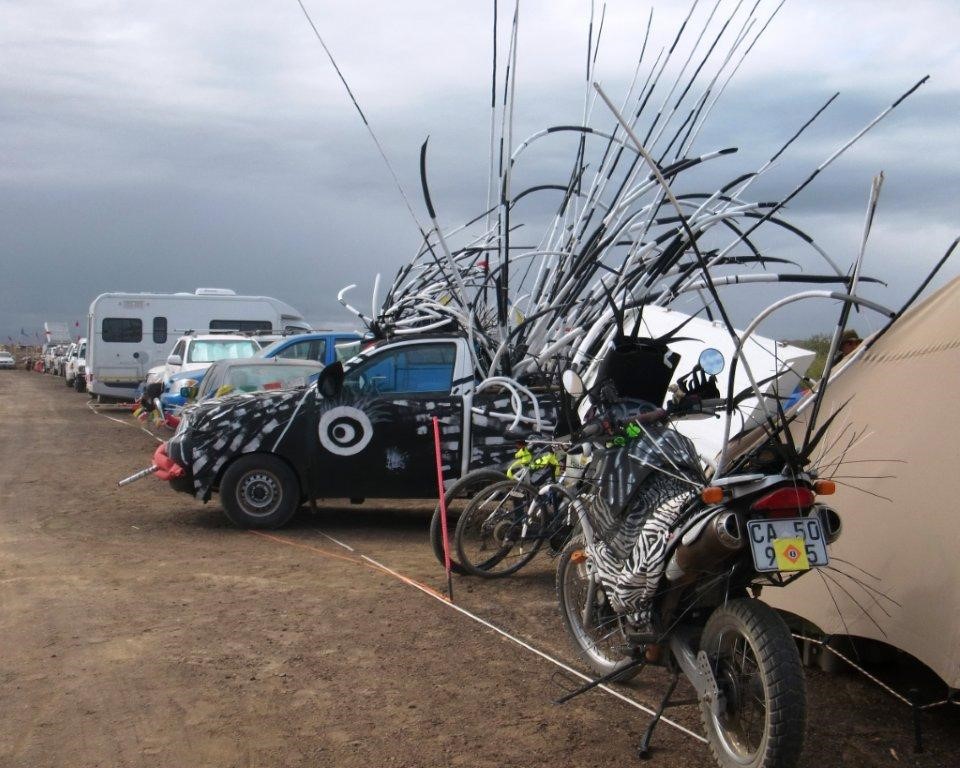
A simple exercise illustrates this point effectively: Take an apple in your hand and study it carefully. Observe and, if you wish, make notes on what you see — the type of apple, its colour, shape, size, and the number you are holding. You are warmly invited to do this before reading the text below this delightful photograph of the mutant porcupine vehicle if you truly wish to grasp the essence of my message.
Ninety-nine percent of people can do this exercise quickly and easily, concluding that they are simply looking at the one apple in their hand. If you reached the same conclusion, it is because the obvious has blinded you to a deeper truth: you are, in fact, observing an infinite number of apples. Each apple contains many seeds, each capable of becoming a tree that produces countless more apples, following an ever-expanding exponential principle. In essence, the single apple in your hand holds the potential to feed the world under the right conditions.
My challenge, both to myself and to others, is to remain vigilant against the “one apple syndrome.” If we see only the single apple before us, we risk overlooking the infinite potential inherent not only in that apple, but in everything around us. Recognising this boundless possibility allows us to act with vision, creativity, and responsibility, fully embracing the interconnected nature of life and the opportunities it presents.
Here then are some of the things I feel detracted from what you are trying to achieve with
the festival and which are not aligned with your guiding principles :
In addition to the strictly enforced code of conduct aimed at protecting the pristine physical environment of Tankwa Town, I believe the same conscientious principles should be extended to the sonic environment. In the natural world, amplified sound or music often feels incongruent with the harmony of the surroundings, particularly when contrasted with the organic resonance of acoustic sound.
During the event, the proliferation of powerful sound systems appeared to compete for dominance, resulting in an almost continuous 24-hour sonic bombardment. This was not only intrusive for many participants but also profoundly disruptive to the other life forms inhabiting the area. The absence of silence — even several kilometres beyond the camp — was striking. Sonic or air pollution is indeed a form of environmental pollution; much like the global restriction on smoking in public spaces, it demands awareness and regulation for the well-being of all.
Furthermore, the overwhelming level of amplified sound stands in contradiction to several of your guiding principles, including Communal Effort (collaboration and cooperation), Participation (actions that open the heart), Civic Responsibility (public welfare and responsibility), Leaving No Trace (respect for the environment), and Radical Self-Expression (respecting the rights and liberties of others).
A simple and practical solution would be to designate a specific area — ideally at least one kilometre away from the main camp — where those wishing to party, rave, dance, and play can freely do so without negatively impacting others. Much like a designated smoking area that respects both smokers and non-smokers, such a “sonic zone” would allow for joyful self-expression while preserving the serenity and sanctity that make Tankwa such a uniquely restorative environment.
I greatly appreciated the thoughtful design and cleanliness of the toilet facilities. However, it would be beneficial to adjust the positioning of the side walls to ensure greater privacy. At present, when standing to remove or replace one’s clothing, individuals may be visible to others on either side. A minor modification to the wall placement would effectively resolve this and further enhance both comfort and dignity for users.
There was a single lone bench placed along the outer perimeter of the camp — a quiet invitation to sit, reflect, and simply take it all in. The opportunity to pause amidst the vast stillness of the landscape offered a deeply grounding and restorative experience. Providing additional benches around the perimeter would encourage many more participants to enjoy this simple yet profound moment of reflection, presence, and connection with the natural world.
Fire Colouring Chemicals
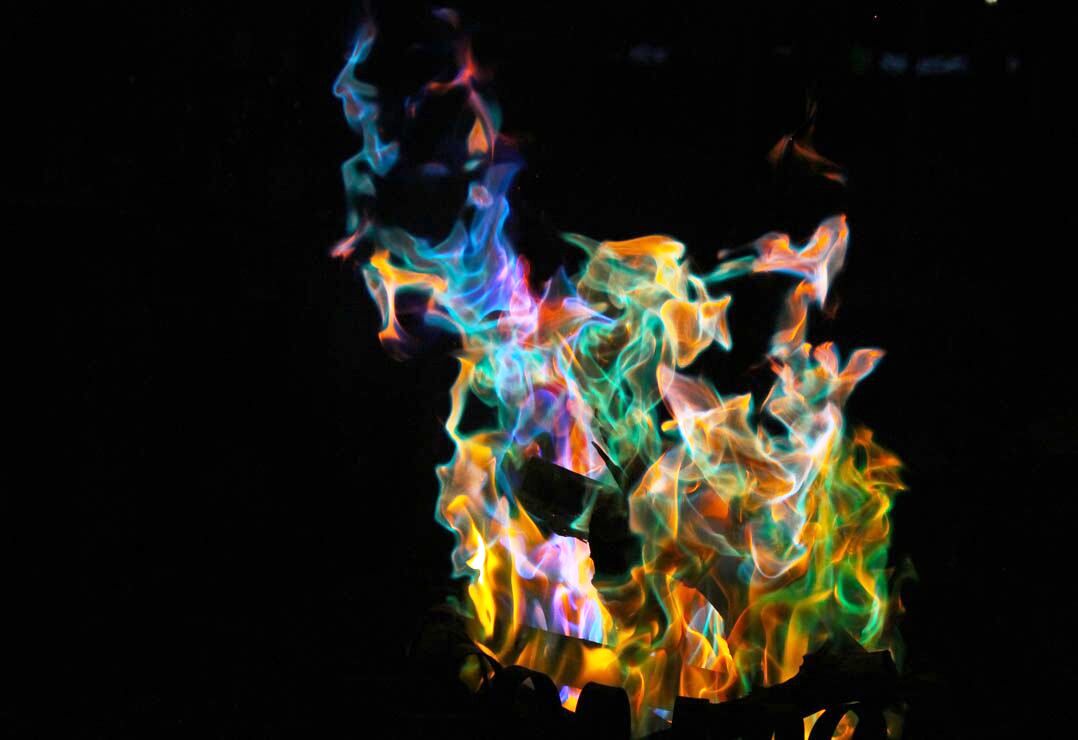
While the visual spectacle of coloured flames is undeniably captivating, it is important to consider the environmental implications of using chemical additives in open fires. Many of these substances release toxic compounds that can contaminate the air, soil, and surrounding ecosystem. In keeping with Tankwa’s guiding principle of Leaving No Trace, it may be worthwhile to discourage or eliminate the use of such fire-colouring chemicals. Preserving the purity of the fire — one of nature’s most sacred elements — not only honours the environment but also deepens the authenticity and spiritual resonance of the communal experience.
Within the Lazer Dome, the exquisite interplay of light and visual artistry offered the potential for a deeply meditative and transcendent experience. However, this atmosphere was unfortunately disrupted by a group of individuals speaking loudly throughout the presentation, diminishing the impact and serenity for others who were simply wishing to absorb and appreciate the visuals in silence.
When I raised this concern with the individual overseeing the space, his response — that he “cannot tell people what to do” — was both surprising and disheartening. Were such an attitude applied to the festival as a whole, the sense of order, beauty, and shared respect that defines the event would quickly dissolve into chaos.
Maintaining quiet within the Lazer Dome is not about imposing restriction, but about honouring the integrity of the experience and respecting the collective intention of those who seek stillness, wonder, and inner reflection. A simple request for silence in this space would uphold the spirit of mutual respect that lies at the heart of Tankwa’s guiding principles.
Introducing specific periods of silence — with no music and minimal talking — would offer participants a unique opportunity to rest, reflect, and reconnect with themselves and the environment. These dedicated hours would provide a much-needed contrast to the vibrant energy of the festival, allowing the mind and senses to recalibrate. By intentionally carving out moments of quiet, the event would honour both the inner experience of attendees and the sanctity of the natural surroundings, reinforcing the festival’s guiding principles of presence, respect, and communal harmony.
Creating an open stage dedicated solely to acoustic music would offer a space for participants to experience sound in its purest form. Without amplification, the music would harmonise naturally with the environment, fostering a deeper connection between performers, audience, and the surrounding landscape. Such a space would encourage attentive listening, mindful presence, and authentic expression, while aligning beautifully with the festival’s guiding principles of communal effort, participation, and respect for the environment.
Introducing the Original Fire at your festival was met with immense excitement, joy, participation, and gratitude. Attendees, including young children, embraced the practice with genuine interest and a heartfelt resolve to make it a part of future burns.
Given that many participants have now learned this meaningful skill, it seems both fitting and inspiring to provide the Original Fire with an official “home” at all future events. Inviting attendees to light their fires, lamps, and candles from this original flame — and, in particular, ensuring that all public burns begin from it — would infuse the festival with a unique sense of continuity, connection, and reverence.
This simple yet profound practice has the potential to grow organically, spreading beyond the festival itself — perhaps even to Burning Man, where such a tradition would be equally cherished and celebrated. By honouring the Original Fire, the festival would not only preserve a beautiful ritual but also cultivate a living legacy that deepens communal bonds and enriches the spirit of the event.
I sincerely hope that these suggestions are received in the spirit of care and constructive intent with which they are offered.
Attached, you will find information on Community Building, a field in which I have been professionally engaged for the past two decades. You will notice that much of the content aligns closely with the guiding principles of your festival.
With authentic and constructive regards,
Bruce Copley
“Any intelligent fool can make things bigger, more complex, more structured, more competitive. It takes a touch of genius and a lot of courage to move in the opposite direction….”
Albert Einstein
HOW COULD THIS BE DONE AT AFIKABURN ?
Using your “gifting” practice, my offer is to teach a core group of your people, eg. fire staff, how to make the original fire using both methods.
They would then teach groups of around 50 interested people (25 pairs) attending the festival how to make the original fire.
Each of these people, in return, could then “pay it forward” and teach other small groups. In this way, the original fire would spread exponentially and be something all interested people could learn to do….exposure to this precious and ancient gift.
In addition to this, it would be ideal if all the 2013 Afrikaburn fires, but especially the final big burn, could be with flames sourced from the original fire.
In all likelihood, this would be a first in South Africa and possibly in the world. I would be able to provide 100 kits required to do this. If it is your pleasure, I look forward to hearing from you.
Yours authentically fired up
Bruce Copley tel 083 459 9894 or 028 273 8261 bruce@aahalearning.com www.aahalearning.com
SUGGESTIONS FOR FUTURE AFRIKABURN GATHERINGS
An offering from Dr Bruce Copley
Igniting the Sacred Heart:
Original Fire in Action
Barbara Kennedy has posted 2 video clips on YouTube, which in just a few days have recorded a number of views. The one showcases the impressive Cheese Grater Sacred Heart burn, which I lit from the Original Fire and in which accompanied by the hit song composed and performed by my son Donovan called “Bush Fire”.
San Clan Burn:
Fire, Crowd, and Dust Devils
The other video is an un-doctored version of the spectacular San Clan burn. It captures the spontaneous and unedited responses from the large crowd and some really unique and very rarely seen “fire dust devils” that emerged during the burn.

BRIEF FEEDBACK : AFRIKABURN 2013
My offer to introduce the Original Fire at the 2013 Afrikaburn was excitedly accepted and enthusiastically supported by Samantha Bendzulla and Jacqui Wolfson. They both saw its potential to transform Afrikaburn into an event that truly honours the sacred and momentous discovery of fire by our ancestors 1.5 million years ago.
I conservatively estimate that around 150 people attended the 8 public Fireshops that were presented during the festival. Many hundreds more witnessed the 3 burns that were ignited by the Original Fire, namely the Cheese Grater Grateful Heart, Compression, and the Abso-lotus-ly burns that took place on Sunday evening.
In addition to this, we handed out 120 fire kits, 80 African penny whistles (Lekolilo’s), 7 PVC didgeridoos, 45 popular books and a selection of CDs and DVDs. We received many compliments from both adults and children, and in particular from a handful of enthusiastic ones who mastered this skill at the festival. This included 2 young boys of about 9 years old who told me with great excitement and pride that they had created their very own fire using the complimentary kits they had received.
FIRESHOPS
Our unique Fireshops offer timeless and practical insights into teamwork, communication, community building, alchemy, interconnectedness, passion, and purpose. Each experience becomes a living metaphor — a powerful reminder of what it truly means to ignite passion, spark purpose, and be forged by learning.
For more information, contact Dr Bruce Copley at 083 459 9894 or bruce@aahalearning.com, or visit www.aahalearning.com.
“Fires first whisper of nostril-biting smoke, conjures up images of our ancient ancestors, passionately coaxing embryonic embers from wood, twirling twigs or flickering flames from flint struck sparks”

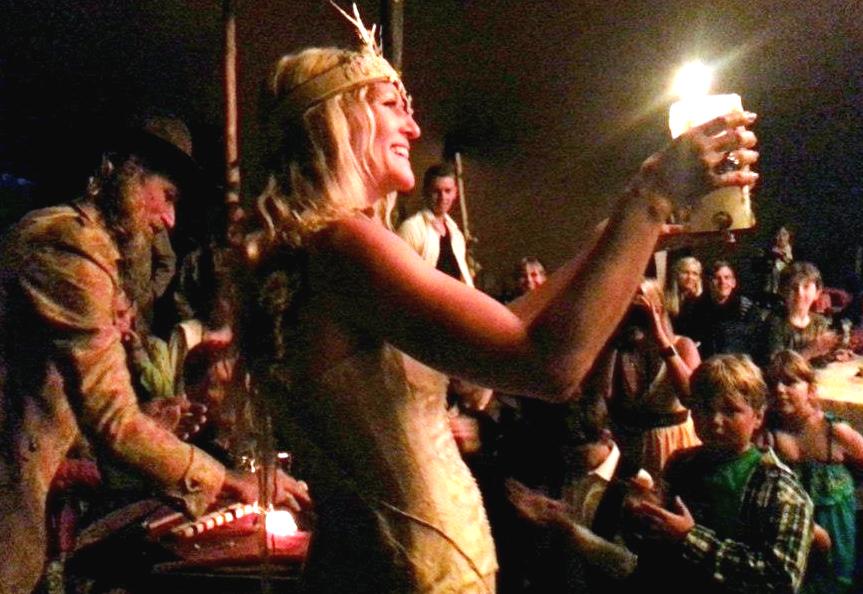
A wedding couple sparking their marriage commitment with the Original Fire
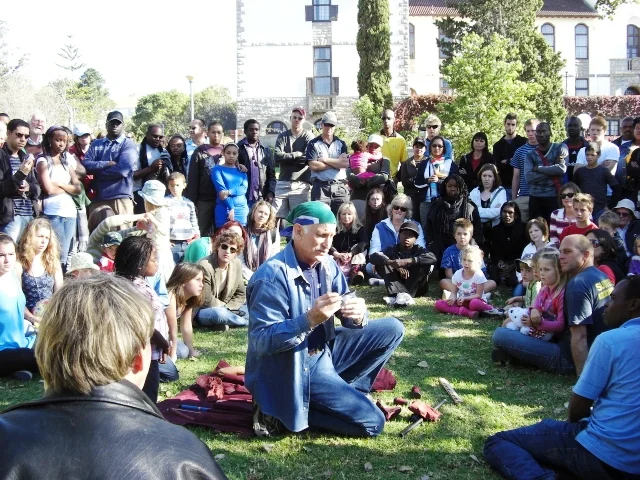
BRUCE TEACHING
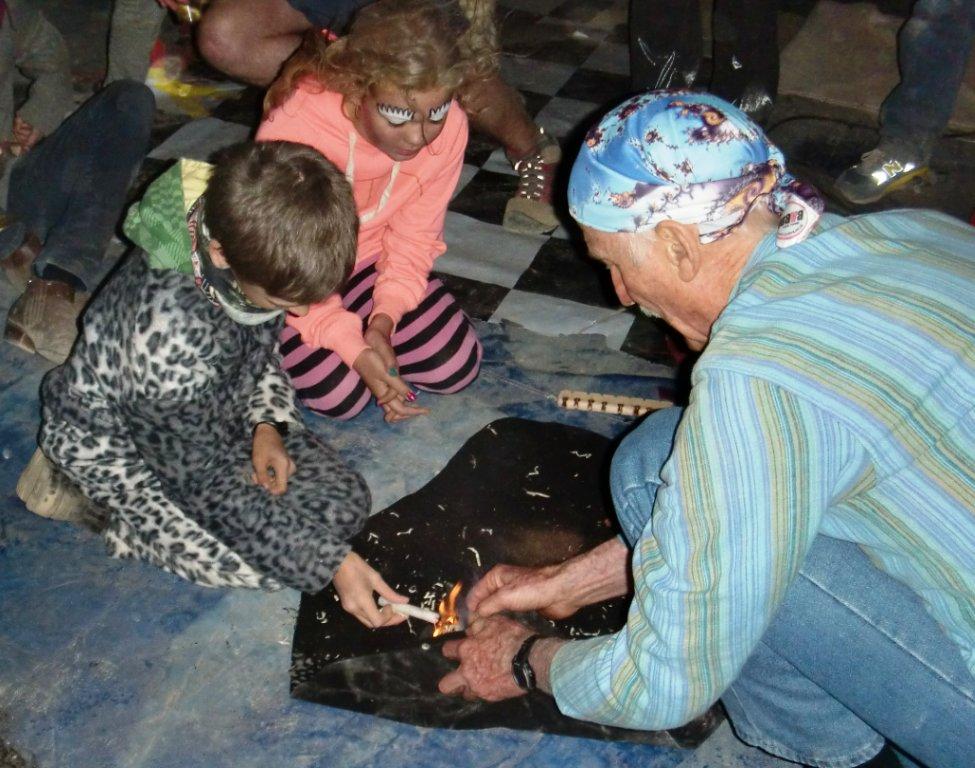
A YOUNG PRIMAL FIRE MAKER IN 2013
Sharing the Ancient Skill with Young Learners
WHAT I REALLY ENJOYED ABOUT MY FIRST AFRIKABURN EXPERIENCE
Afrikaburn is an extraordinary and unique example of what it practically means to:
Slay the status quo | Champion creativity | Confront conformity | Accost apathy
Things that were very meaningful and memorable for me:
The 10 guiding principles, together with the sincere attempts to implement and inspire attendees to embrace them, provided a profound foundation for conscious participation and collective harmony.
The wonderful spirit of Ubuntu — union, communal living, joy, play, and peace — permeated every aspect of the six days, creating an atmosphere of genuine connection and shared humanity.
Captivating expressions of creativity, authenticity, camaraderie, and courageous self-expression were beautifully evident in every corner, reflecting the boundless potential of human imagination and heart.
A deep respect for the environment and the unwavering commitment to the “leave no trace” ethic stood as a shining example of mindful coexistence with nature.
The gathering offered an ideal space to meet people of like minds and open hearts — providing a rare and meaningful opportunity to forge authentic and lasting friendships across all walks of life.

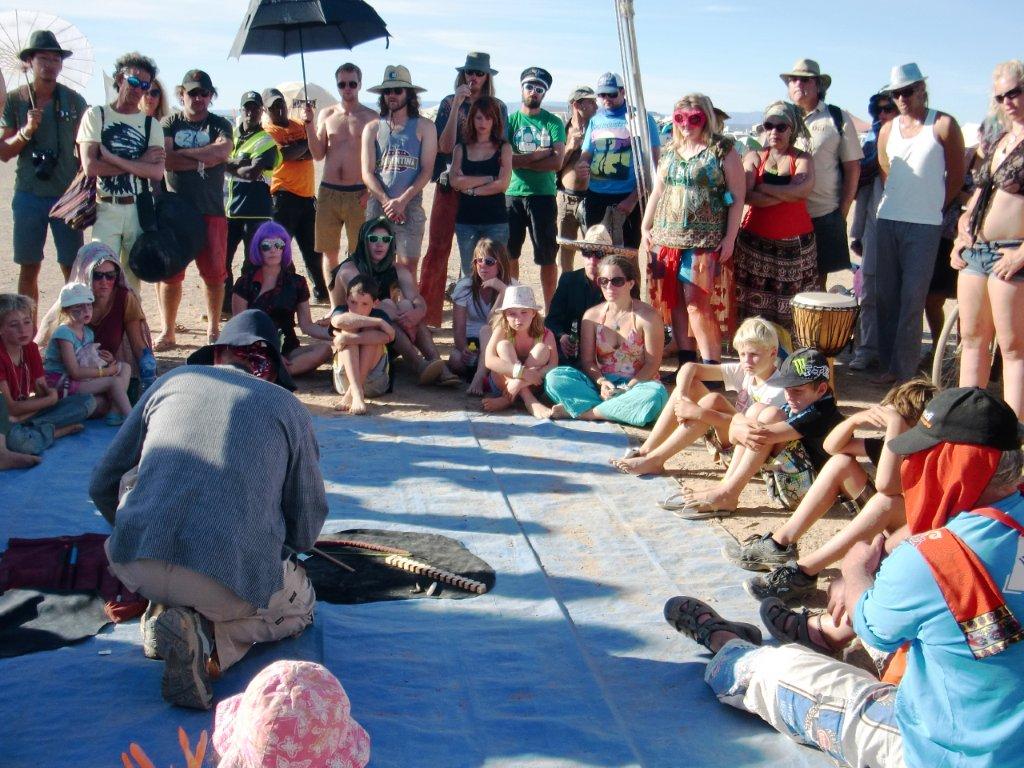
Gallery
Fire connects us to the past, forges a reverence for the natural world and brings back feelings of connectedness that have been lost.
AfrikaBurn 2013 Photos


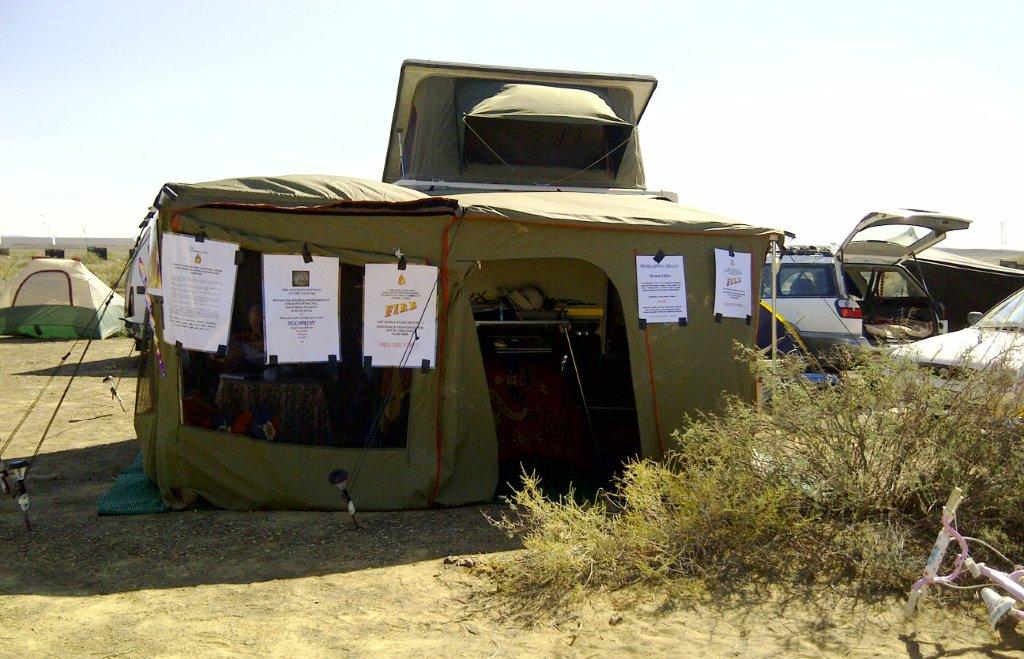
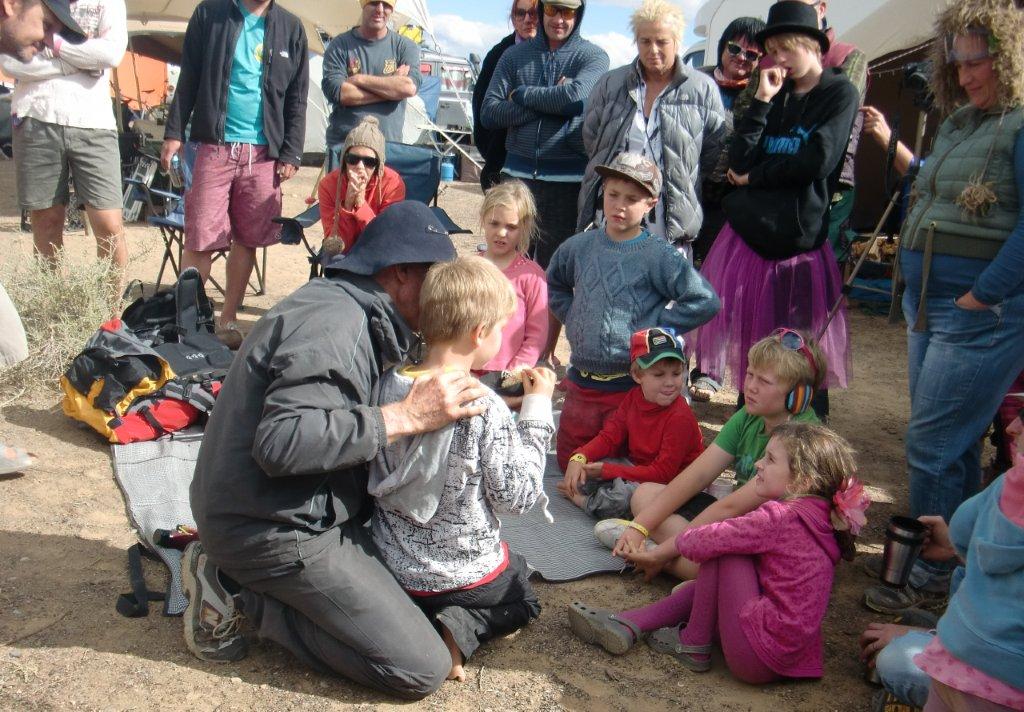


Barbara



Rainbow Fire Photos/ Coloured Fire


The acorn cupule: A gift that keeps on giving

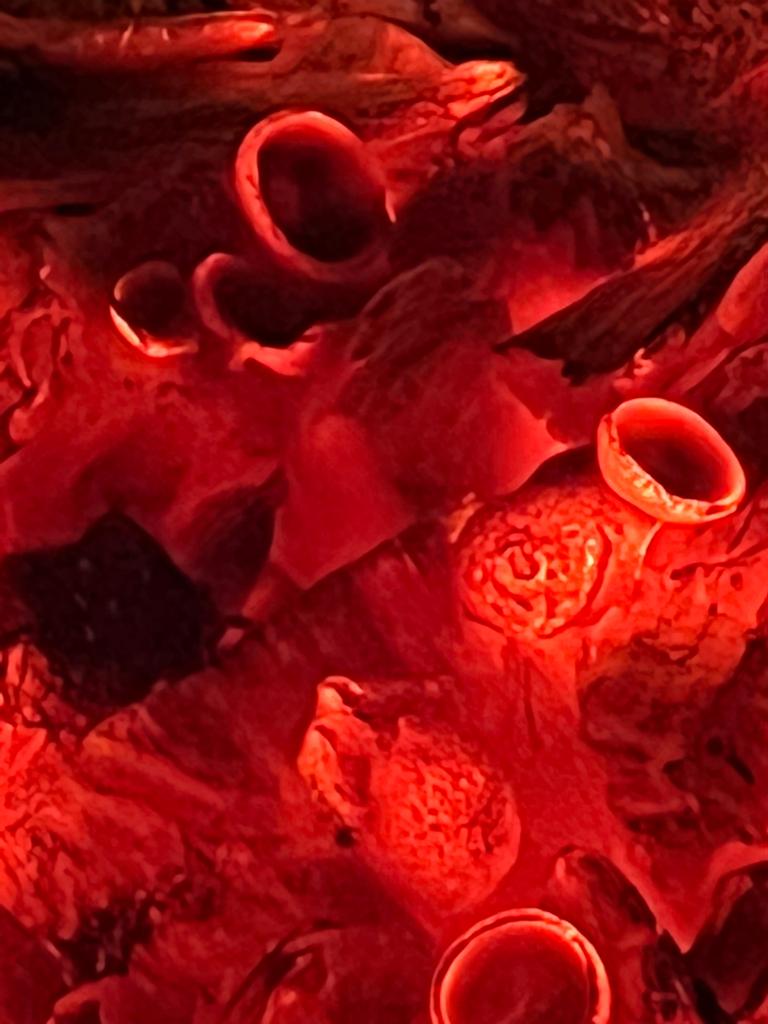
My discovery that the acorn cupule is a fully chromatic wind instrument — with the potential to transform human perceptions of music, nature, trees, and the Oak in particular — now reveals yet another small miracle through the mother of all elements: FIRE.
When an acorn cupule is cast onto glowing coals, it bursts into flames, forming stunningly perfect fire circles. Like music to the ears, this spectacle is an extraordinary sight to behold, a fusion of nature’s artistry and elemental wonder.


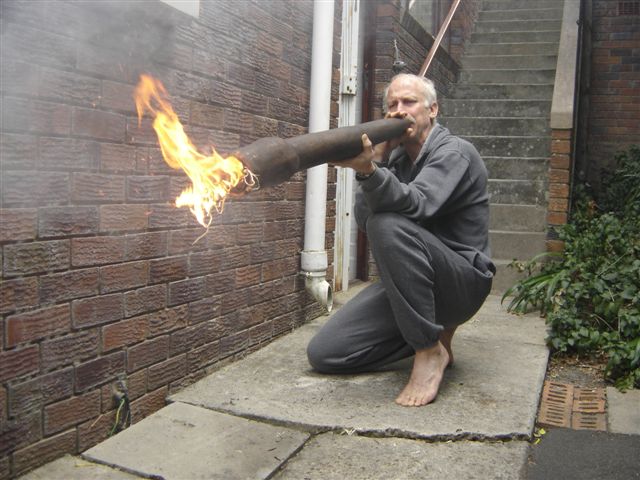


Fire Learners

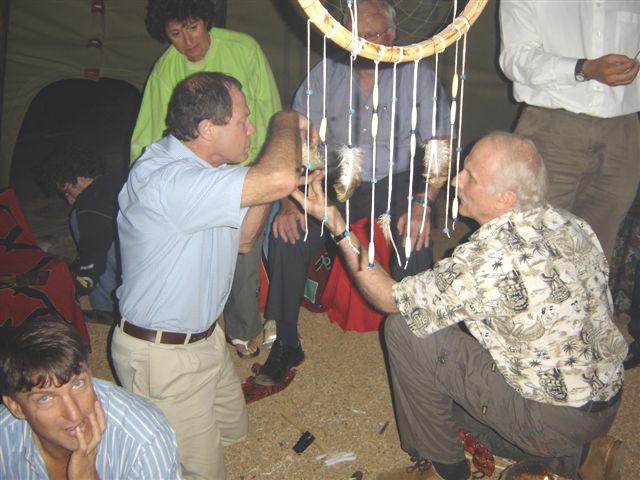

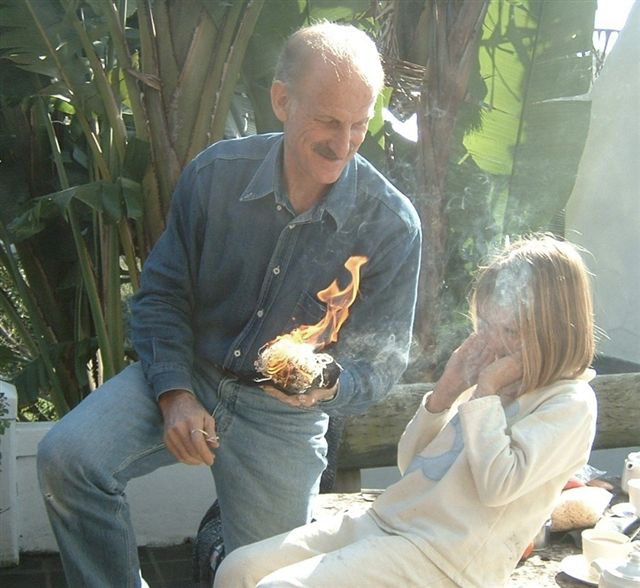


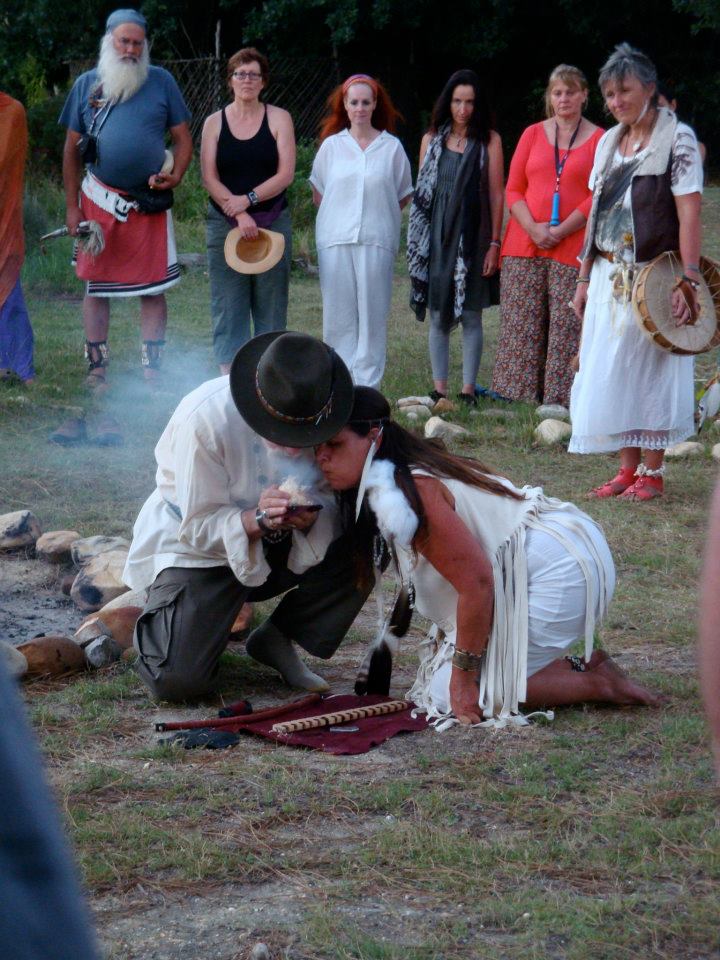
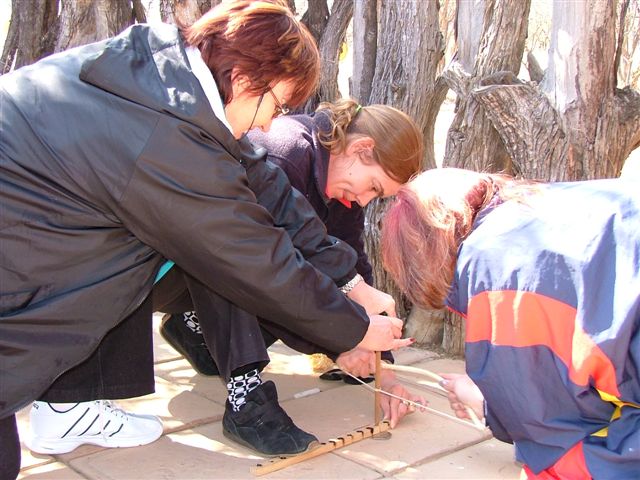

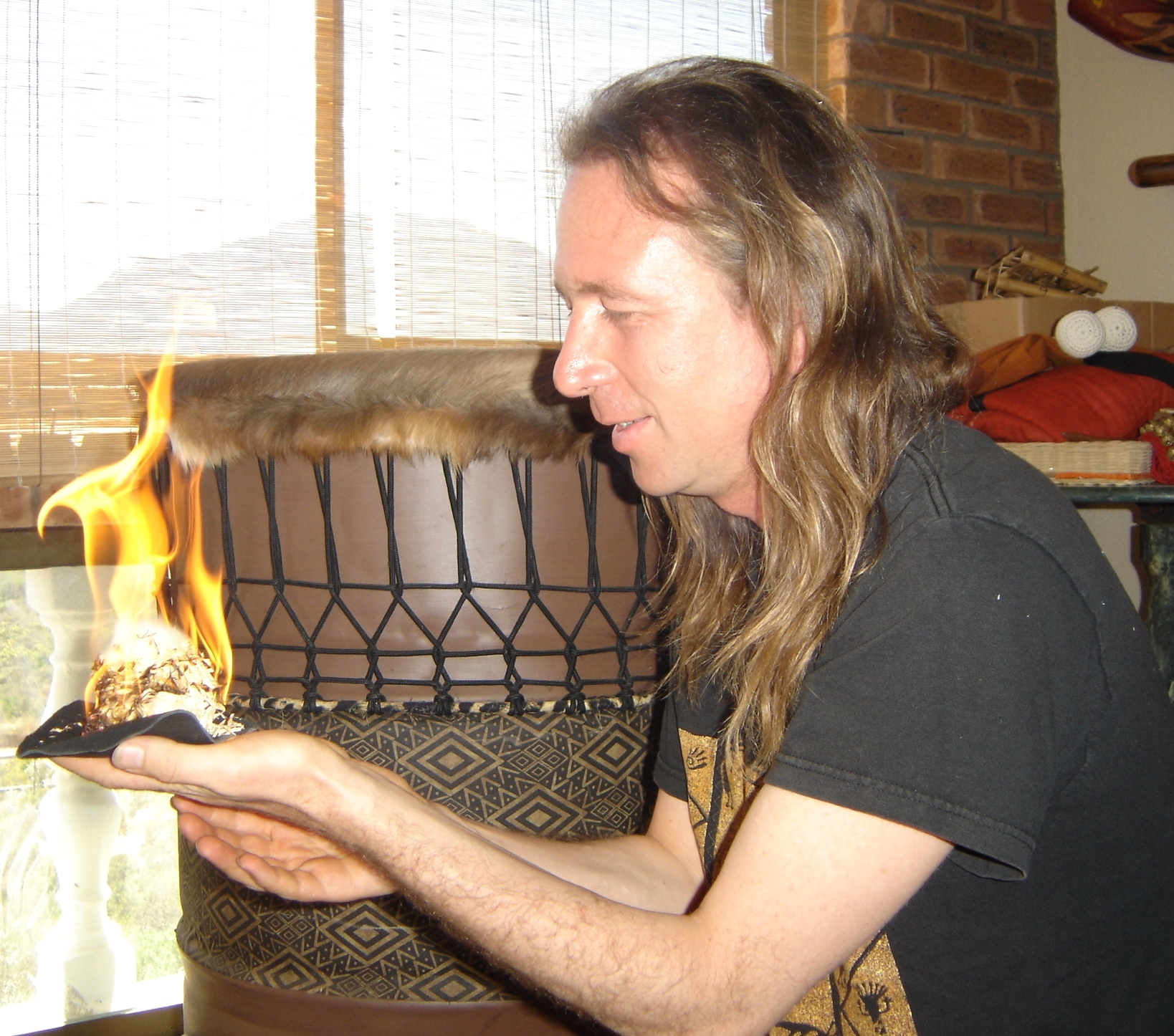


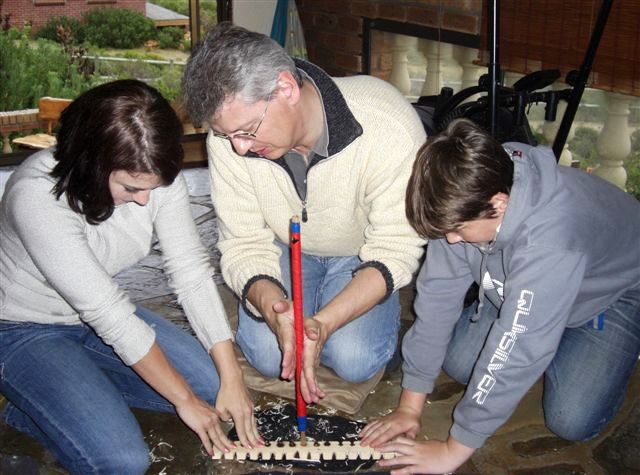
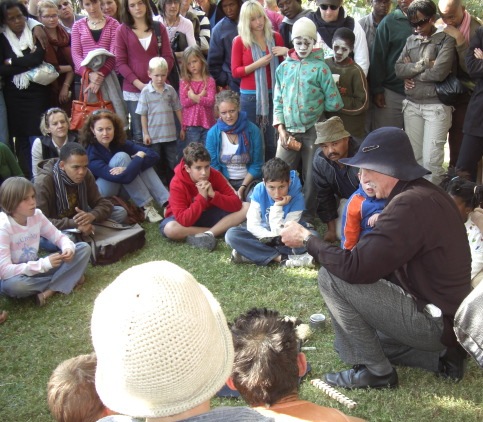


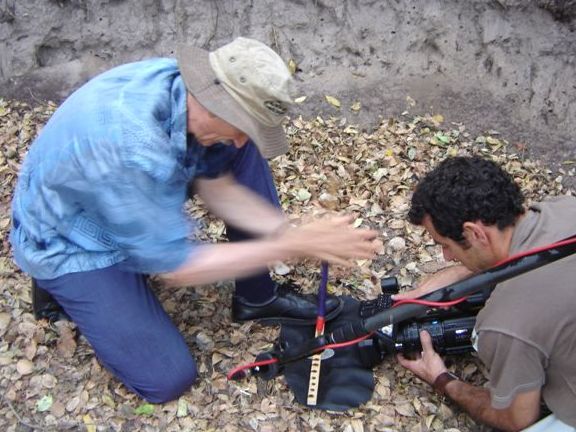

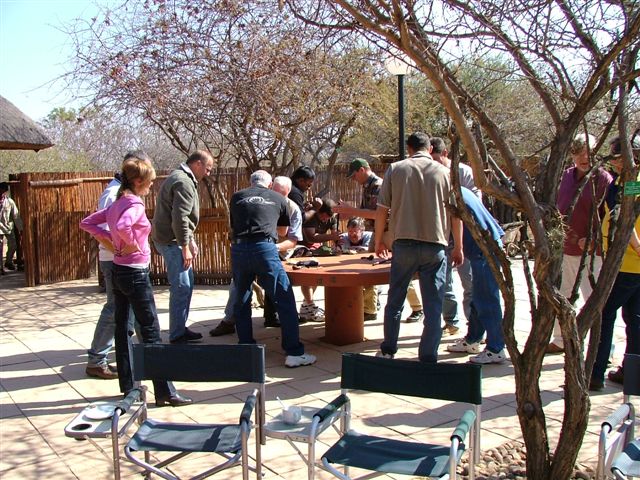


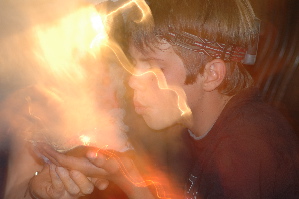

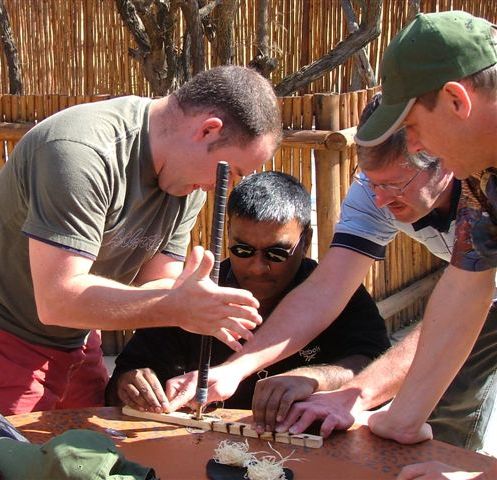

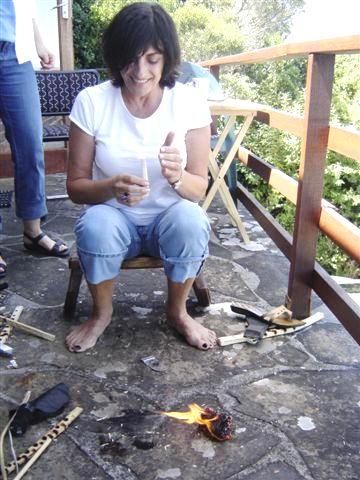
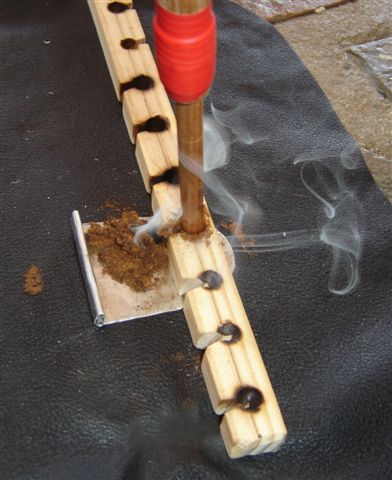
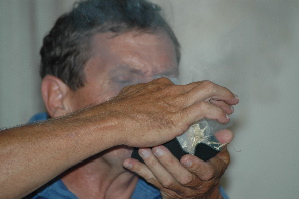


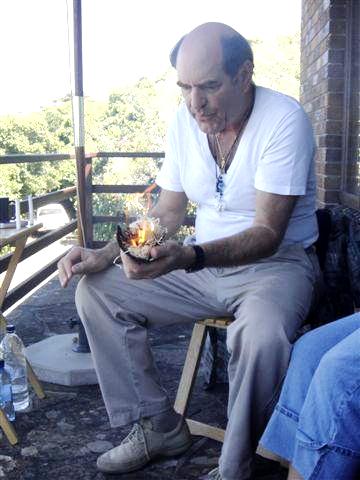
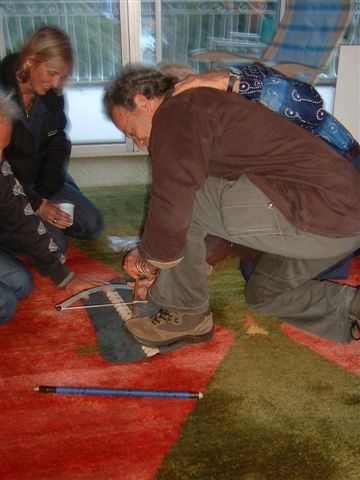
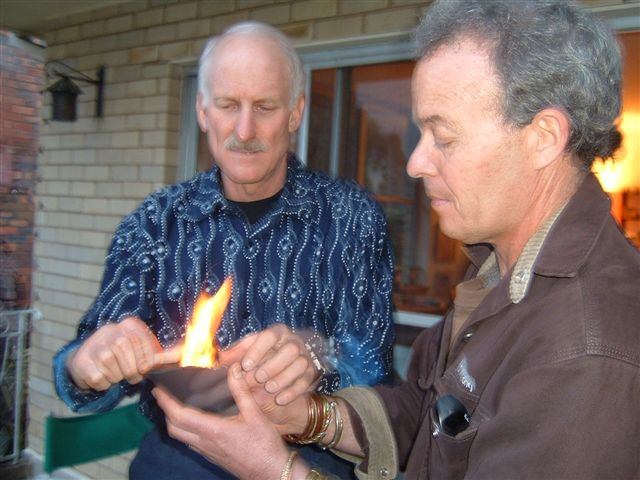

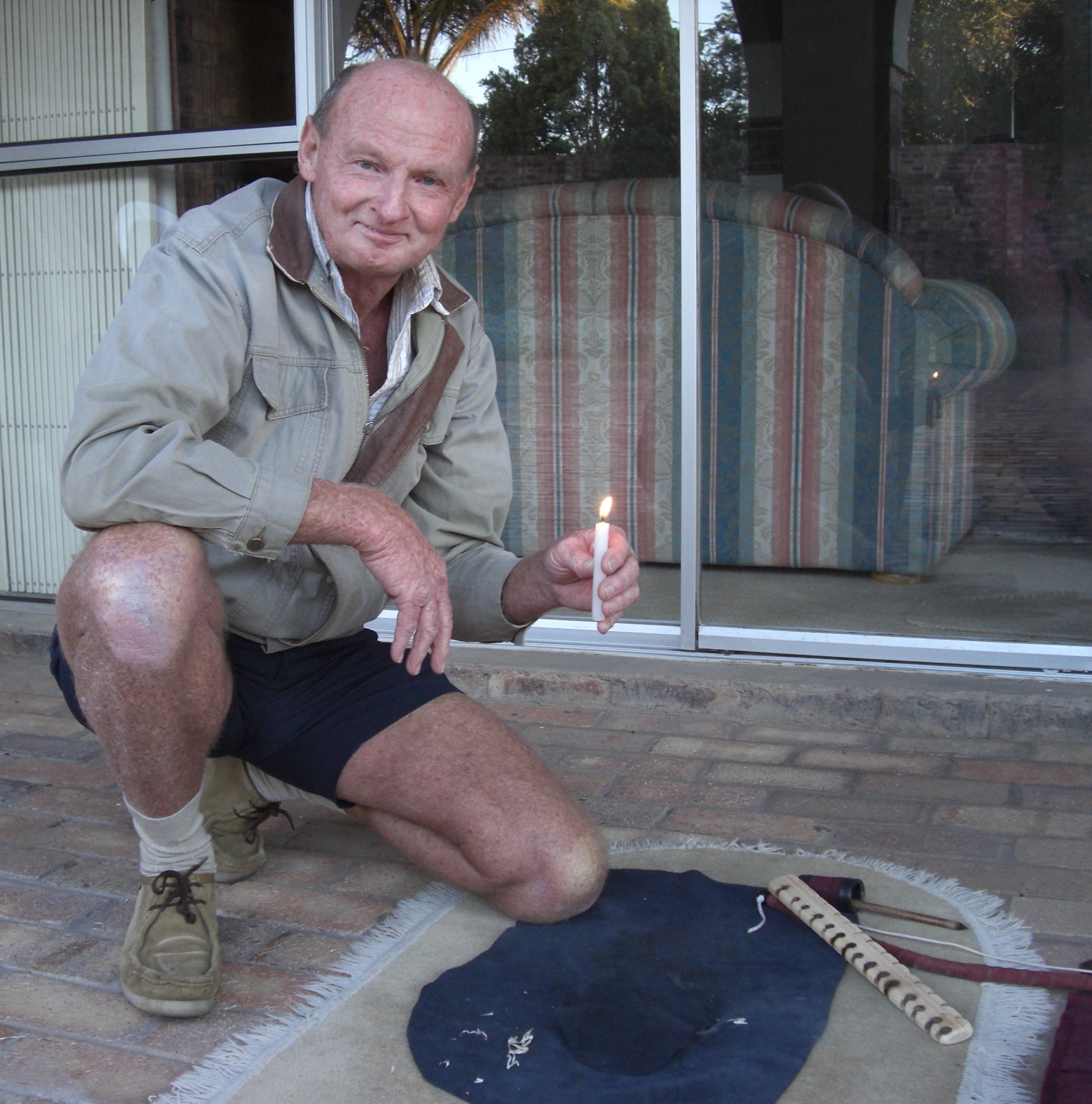
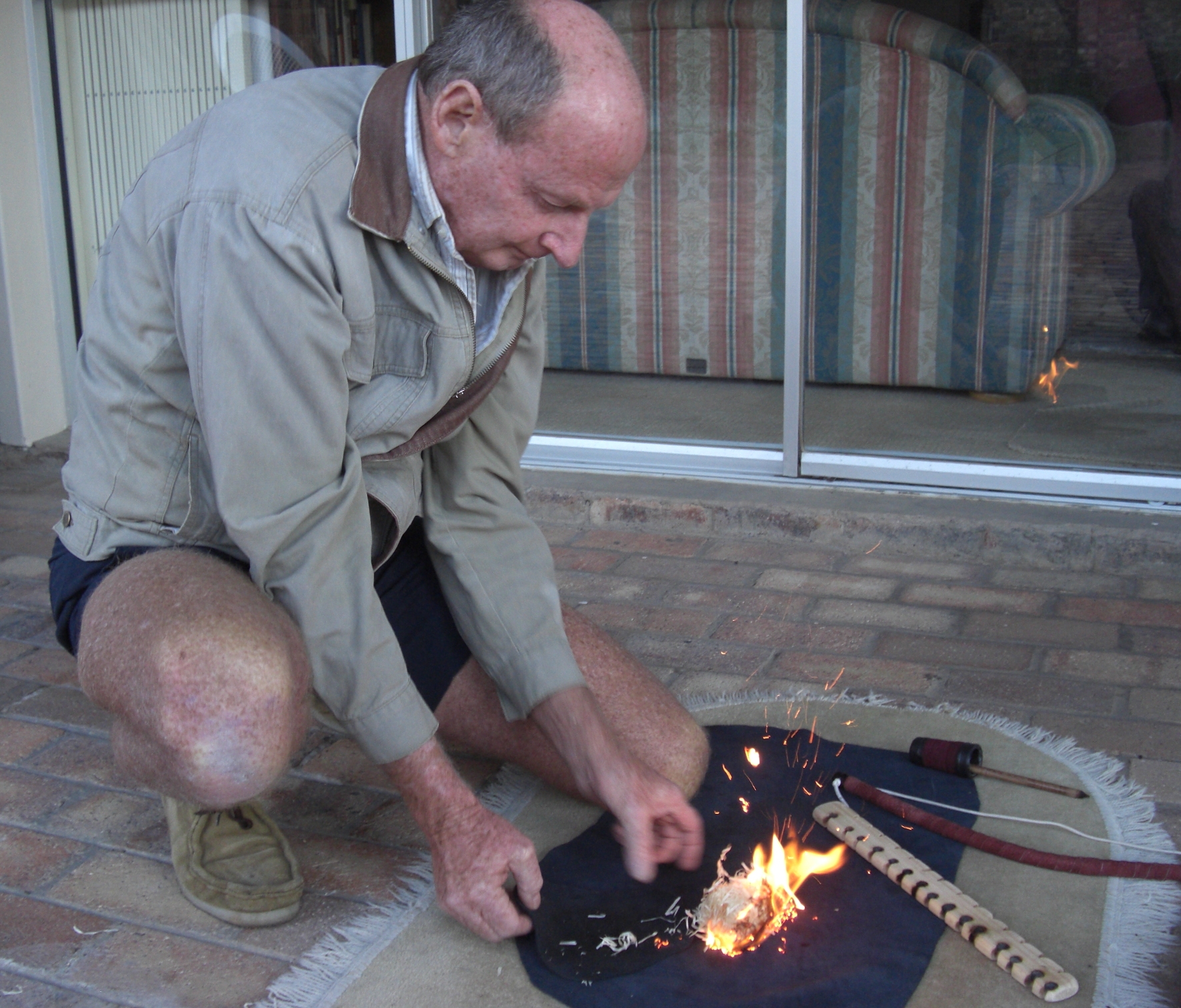
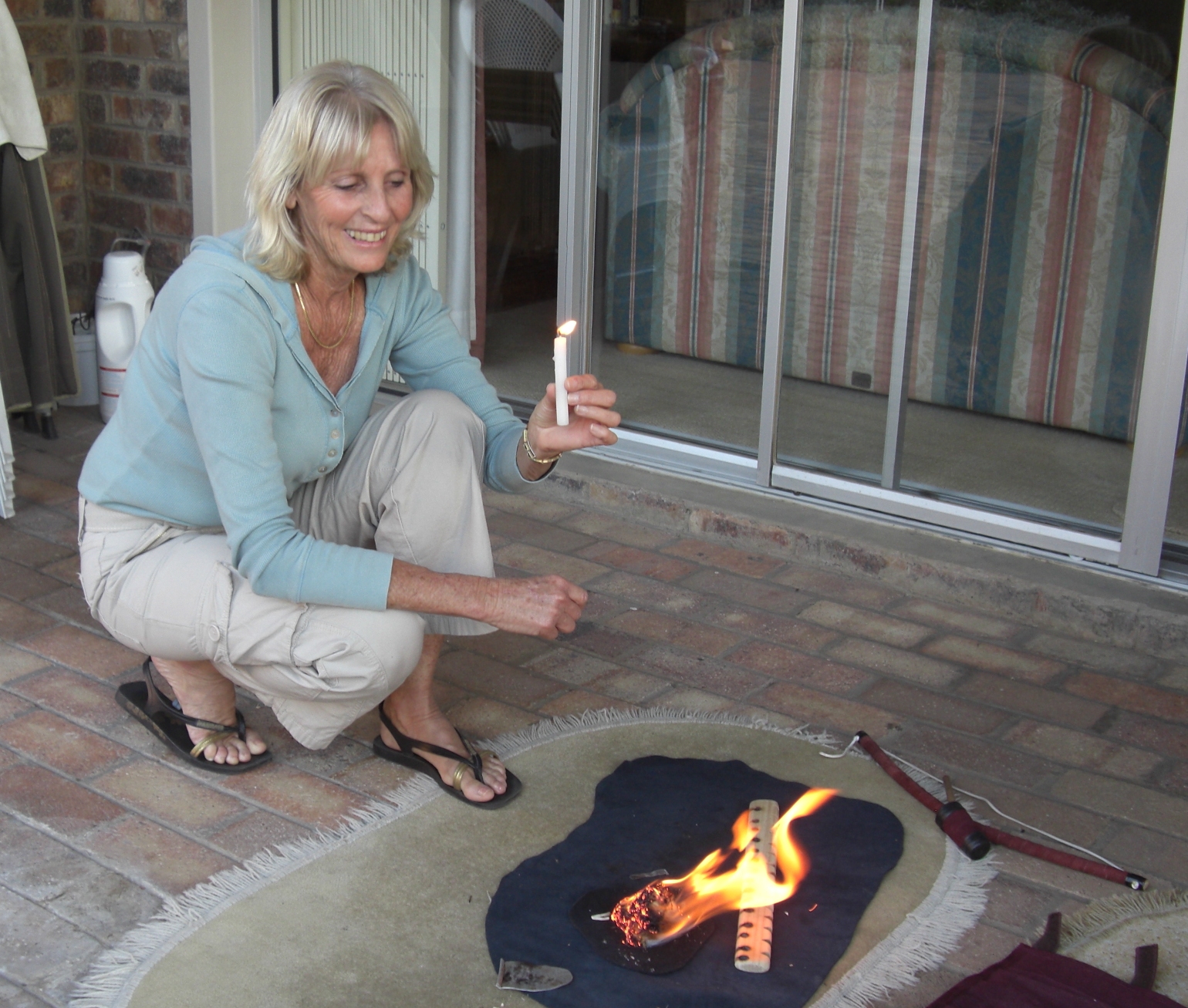
Gail Conference Fireshop:
Igniting Passion and Knowledge
Bruce and Liesl's Overnight Workshop: A Journey into the Heart of Fire-Making
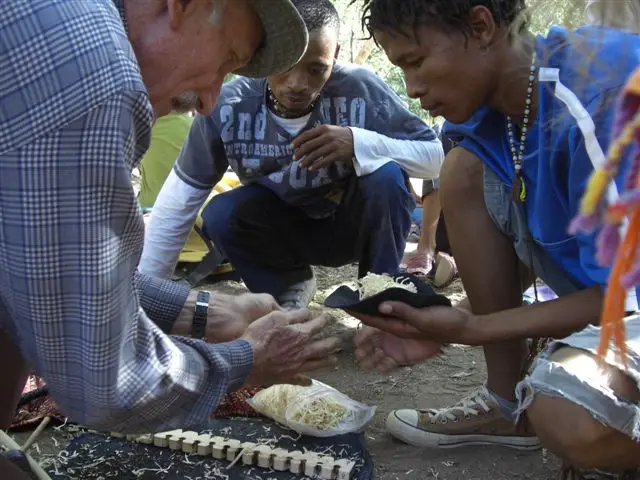
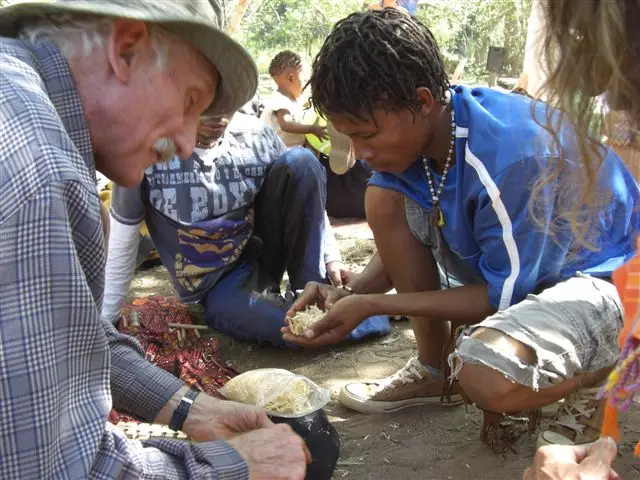
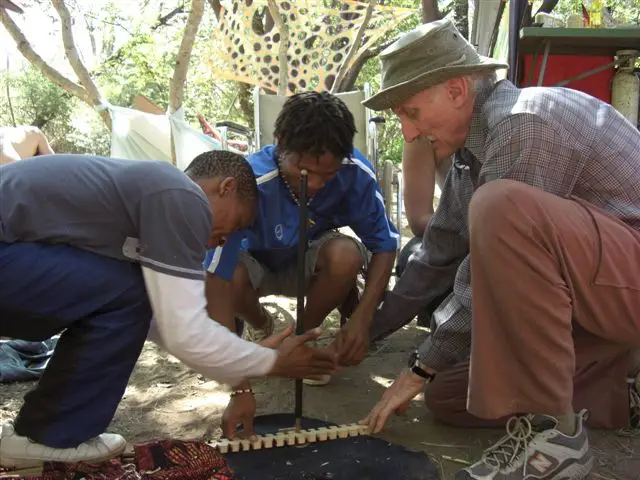
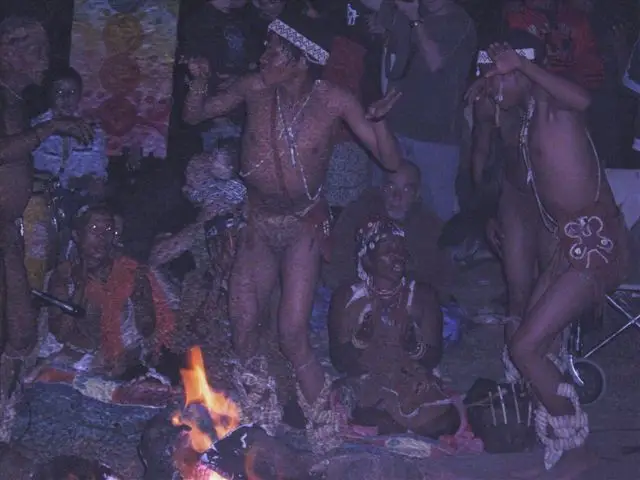
Khwa Tutu


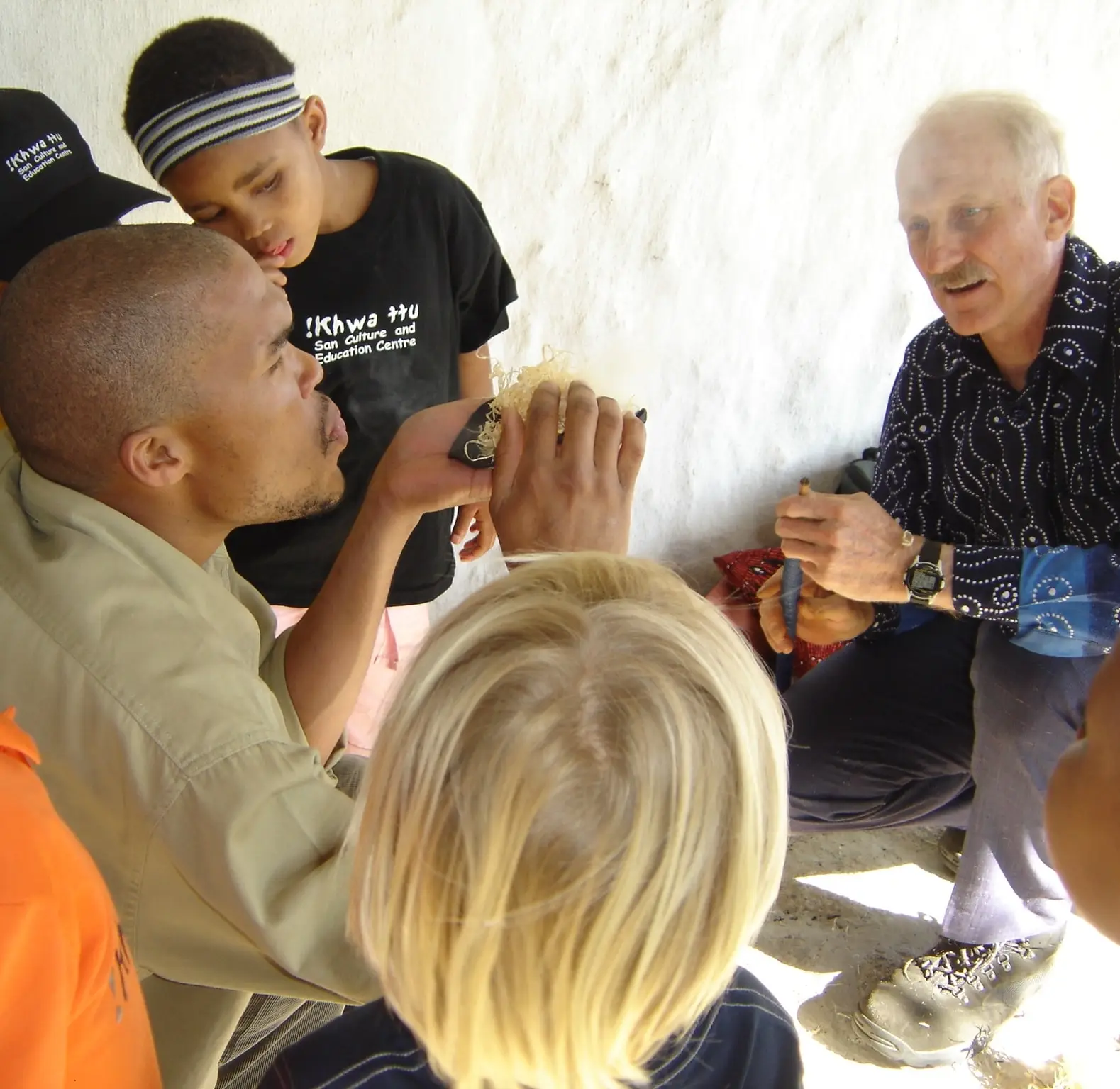

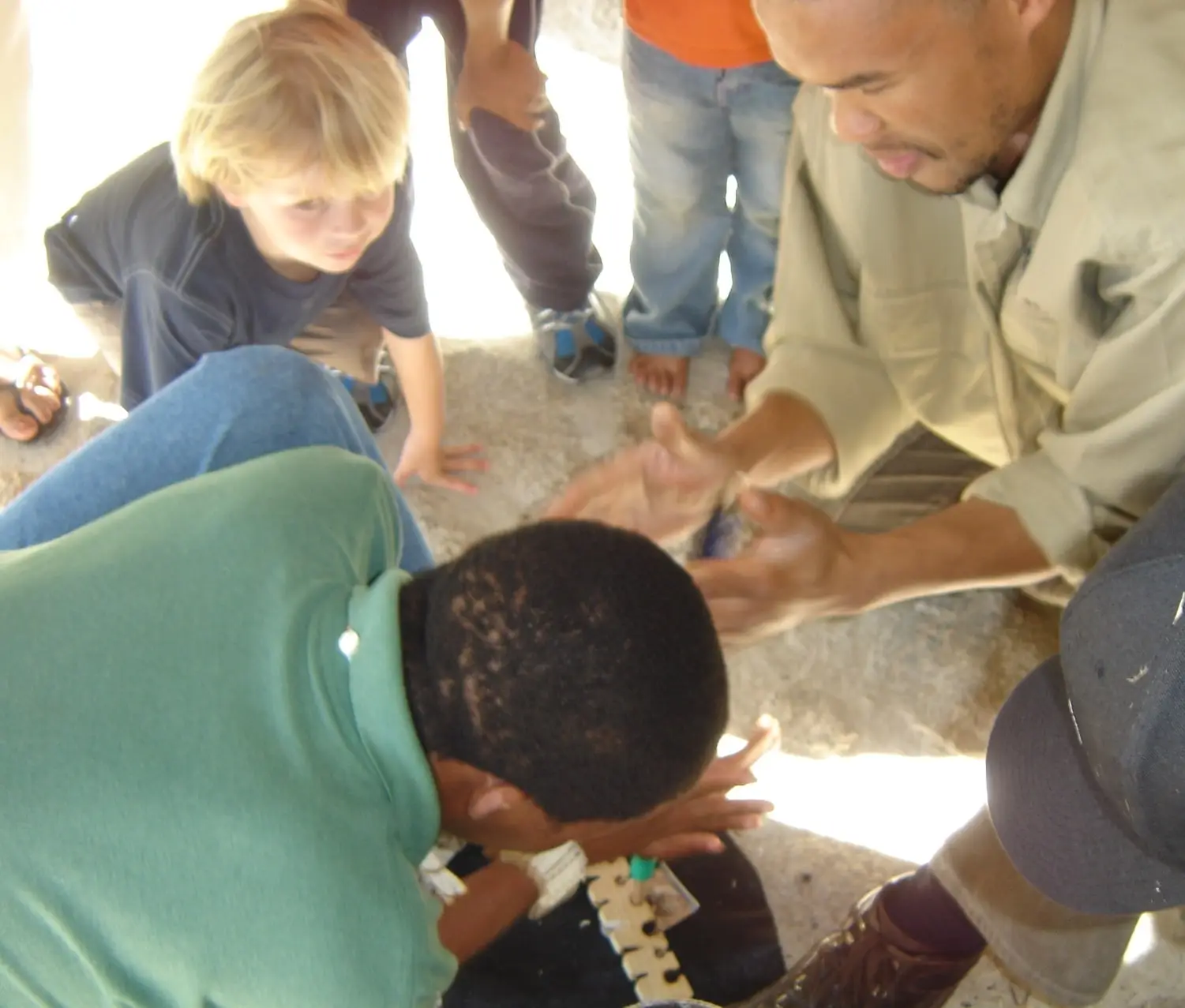


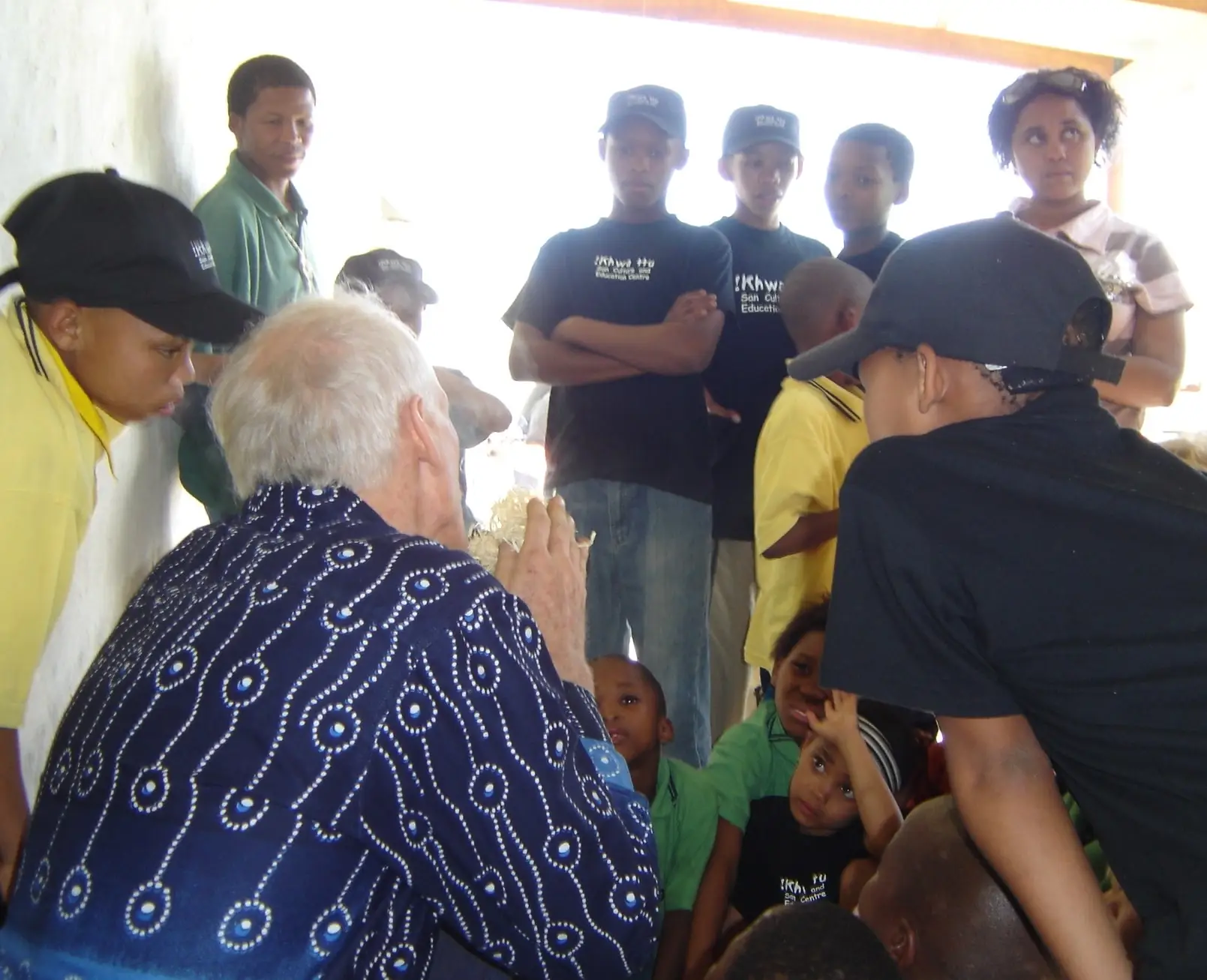
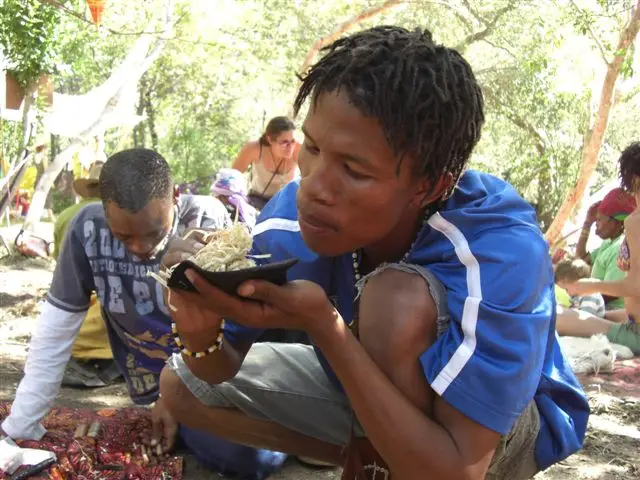
Namibian bushmen in Pretoria

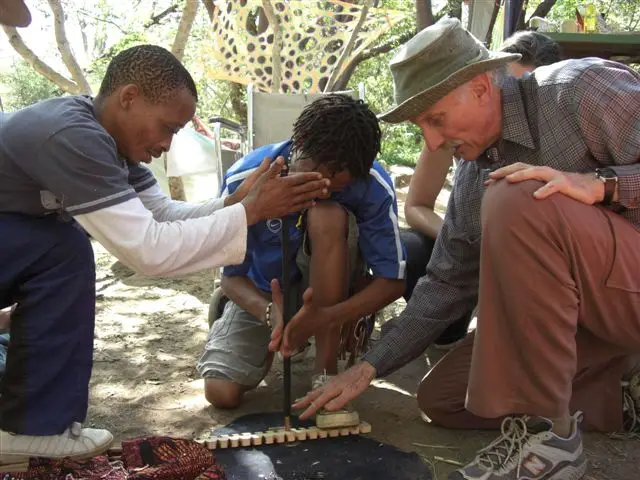

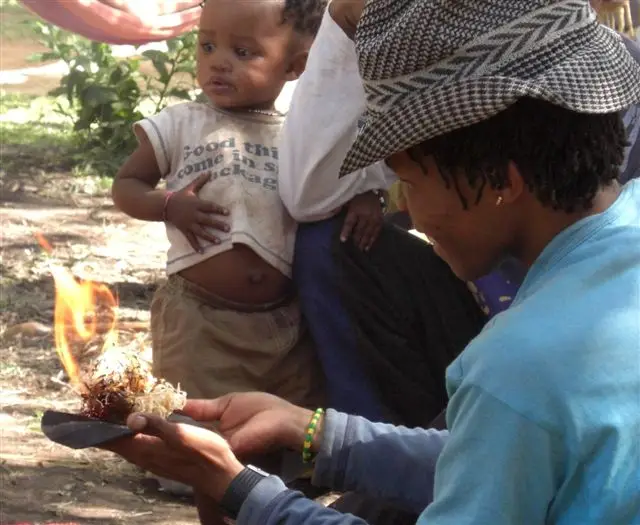


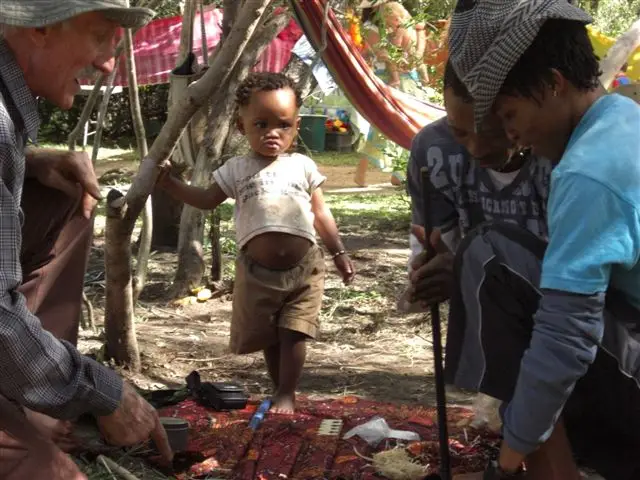


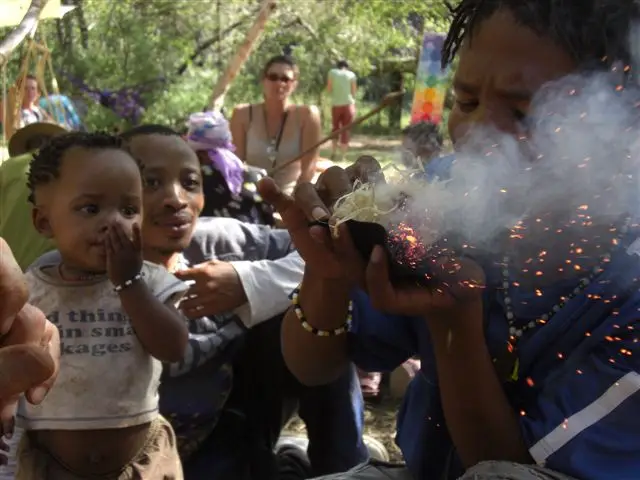

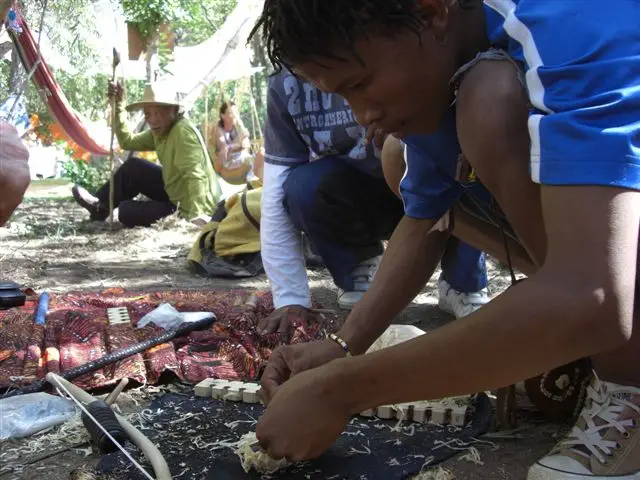




Steward family

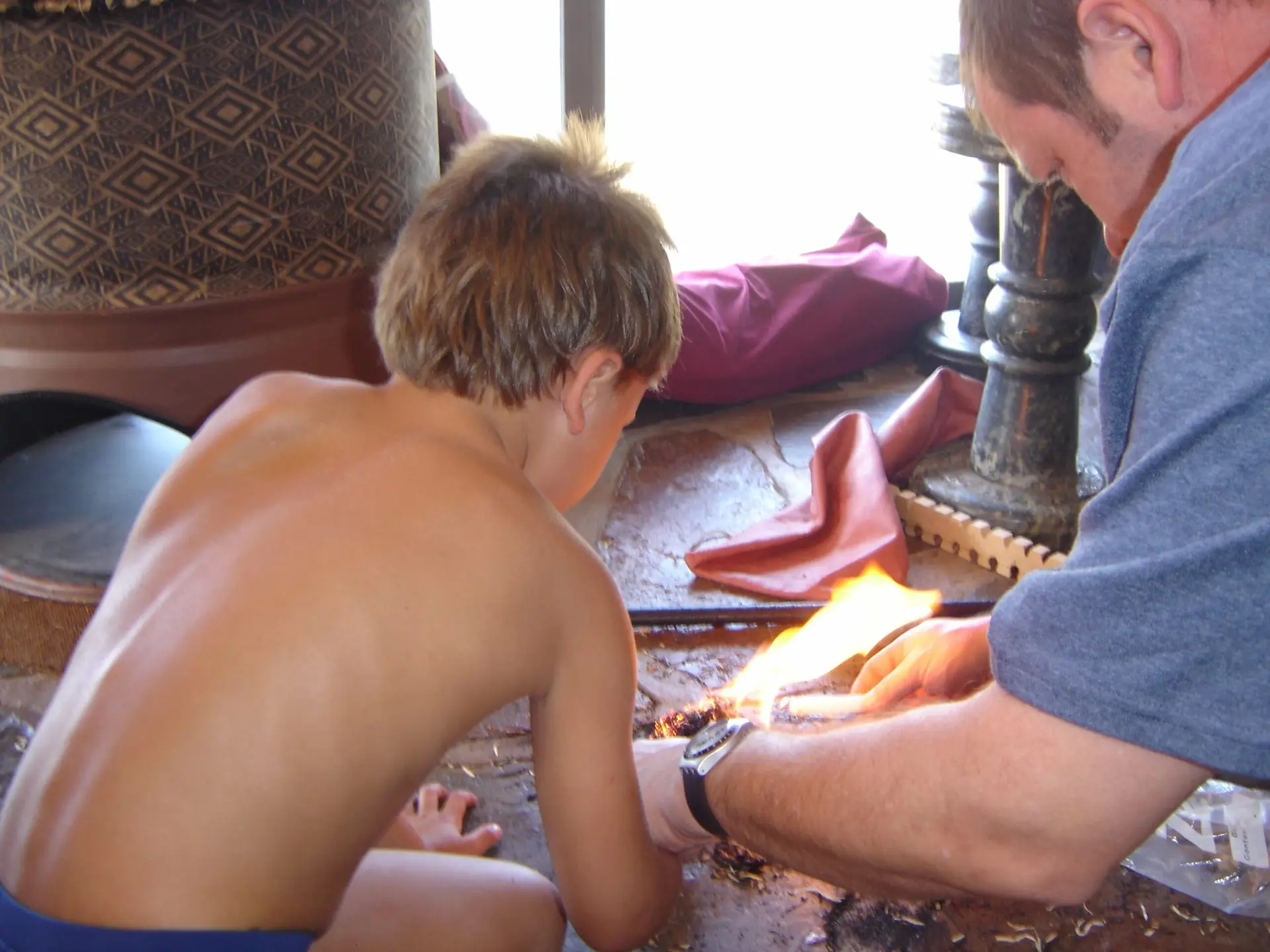
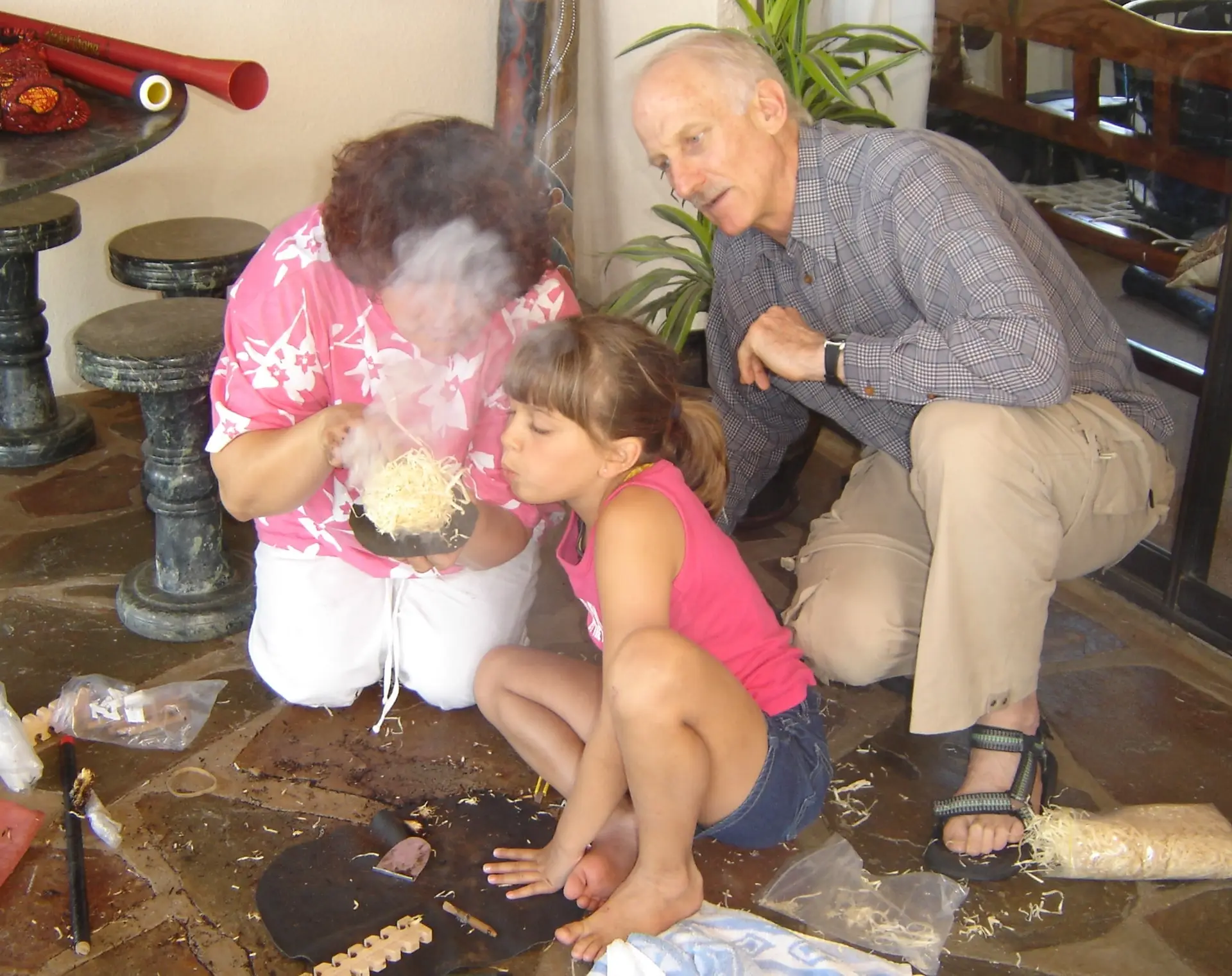
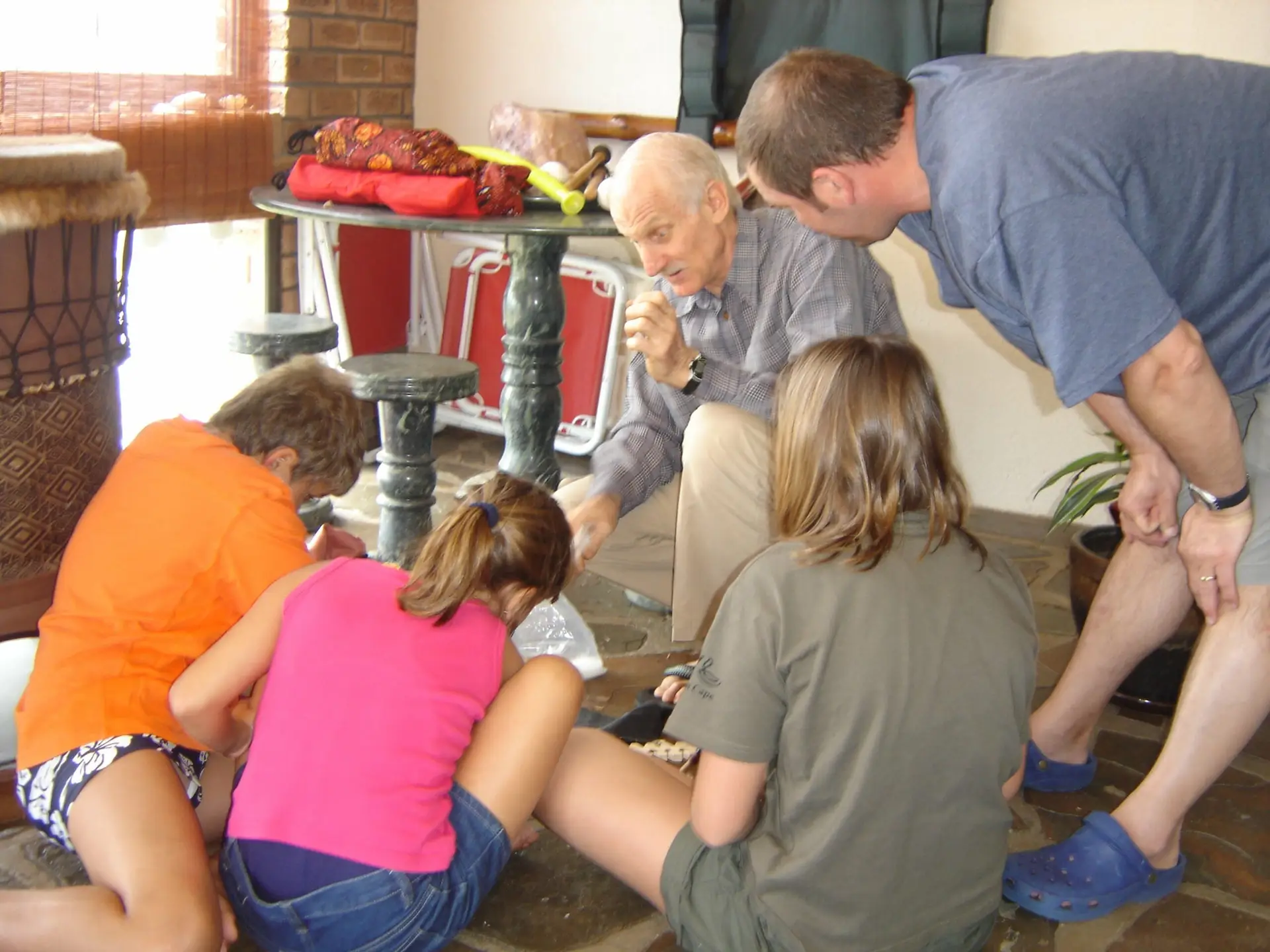

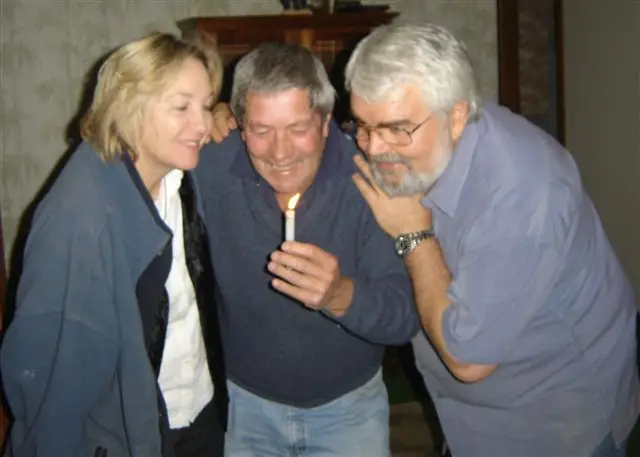

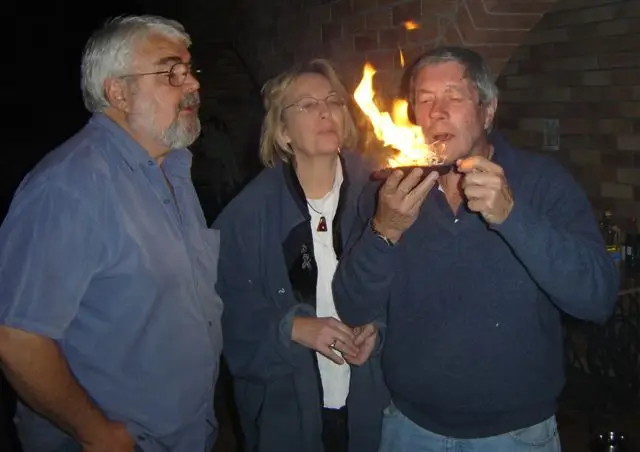

Vincents introduced to fire

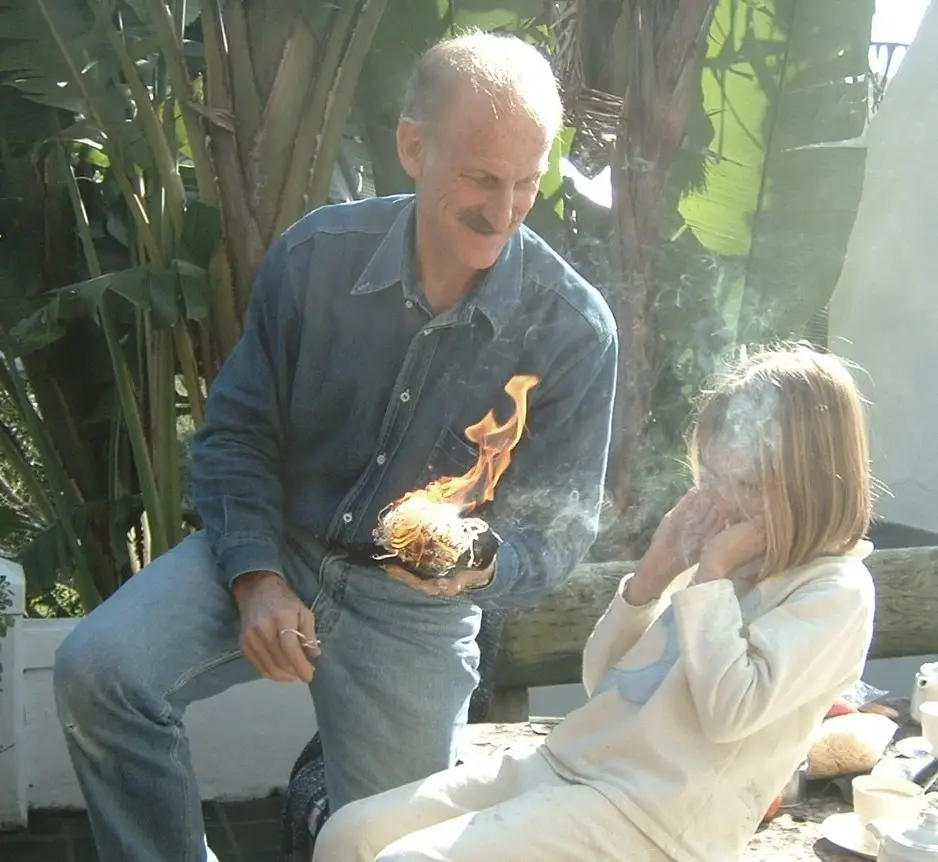

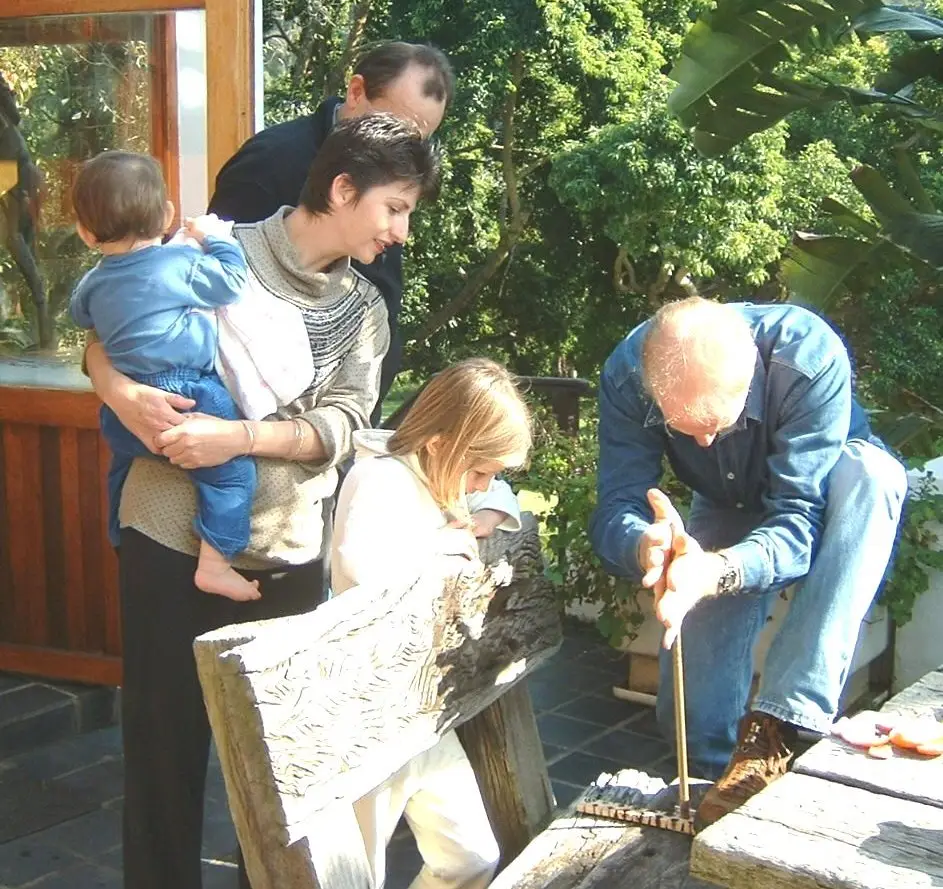
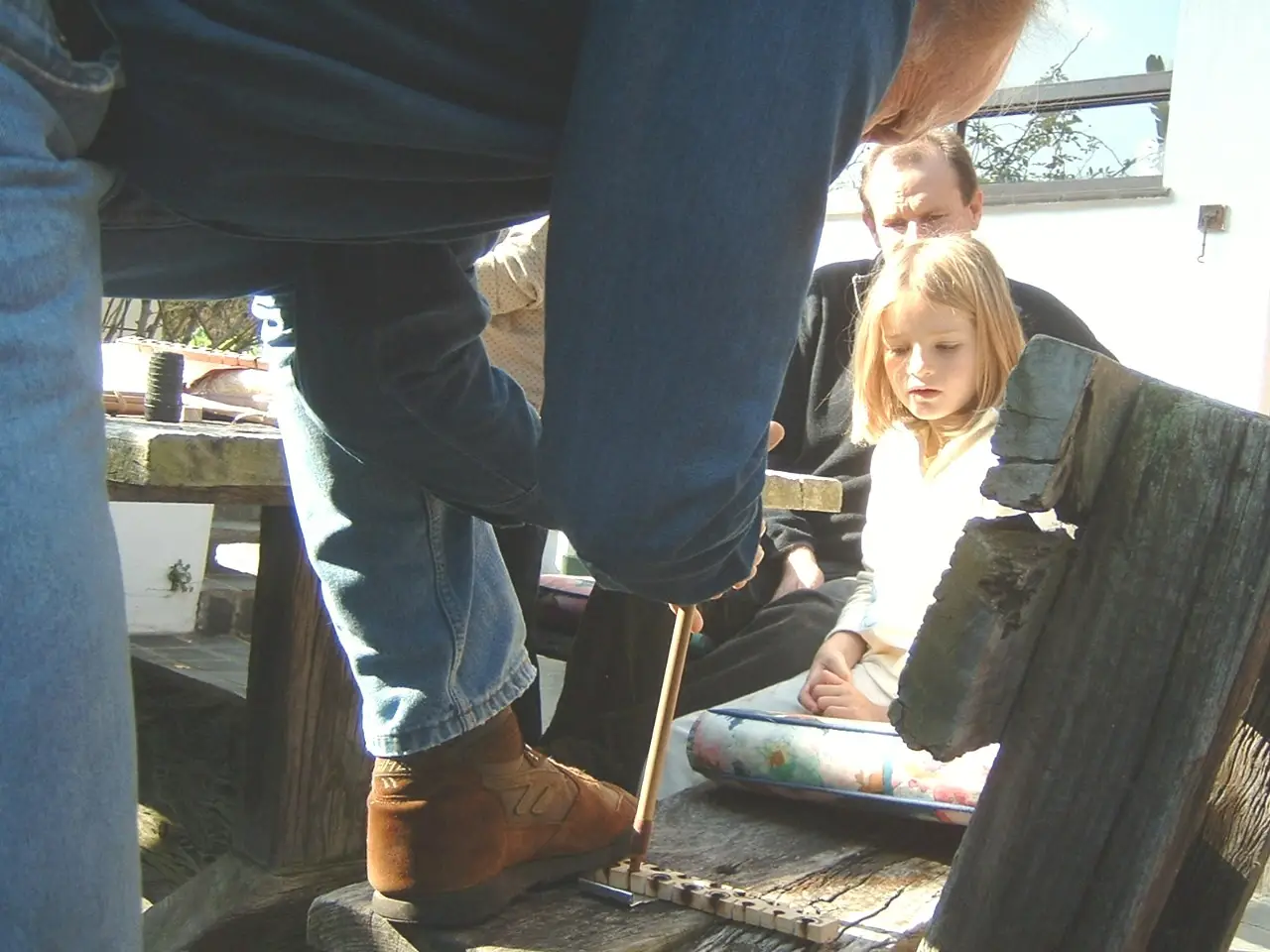
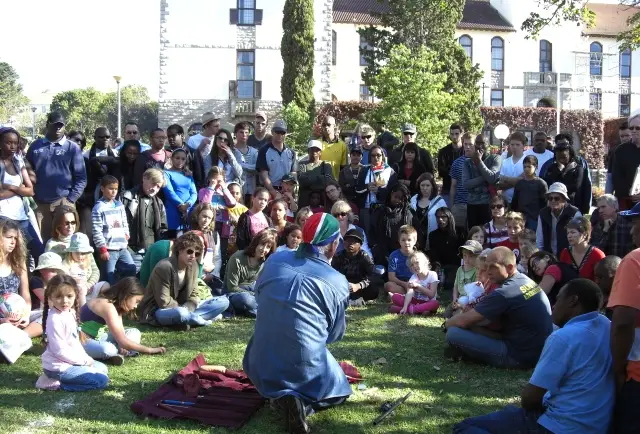
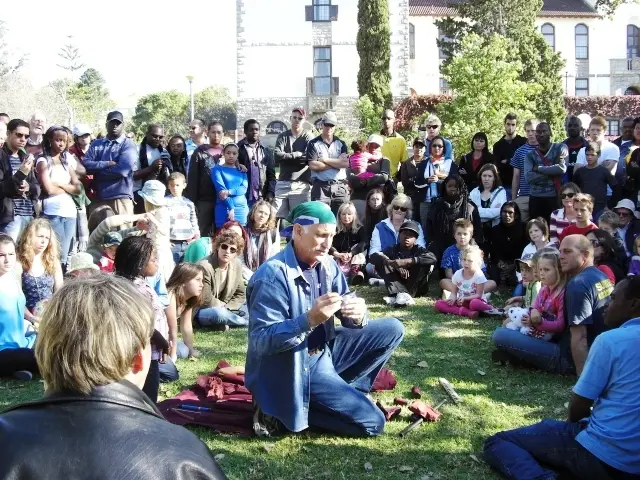


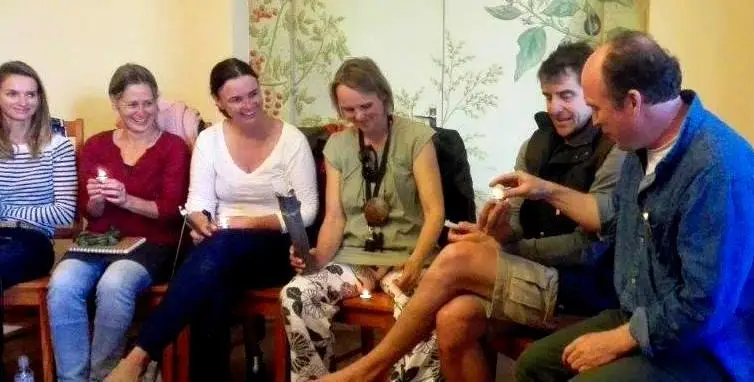

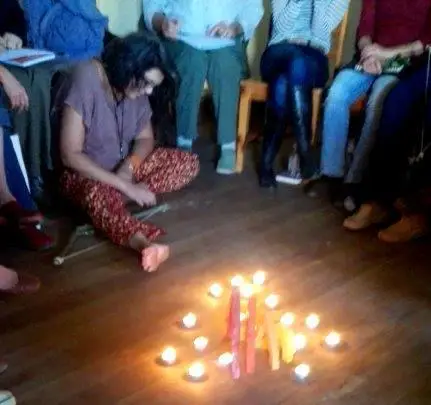

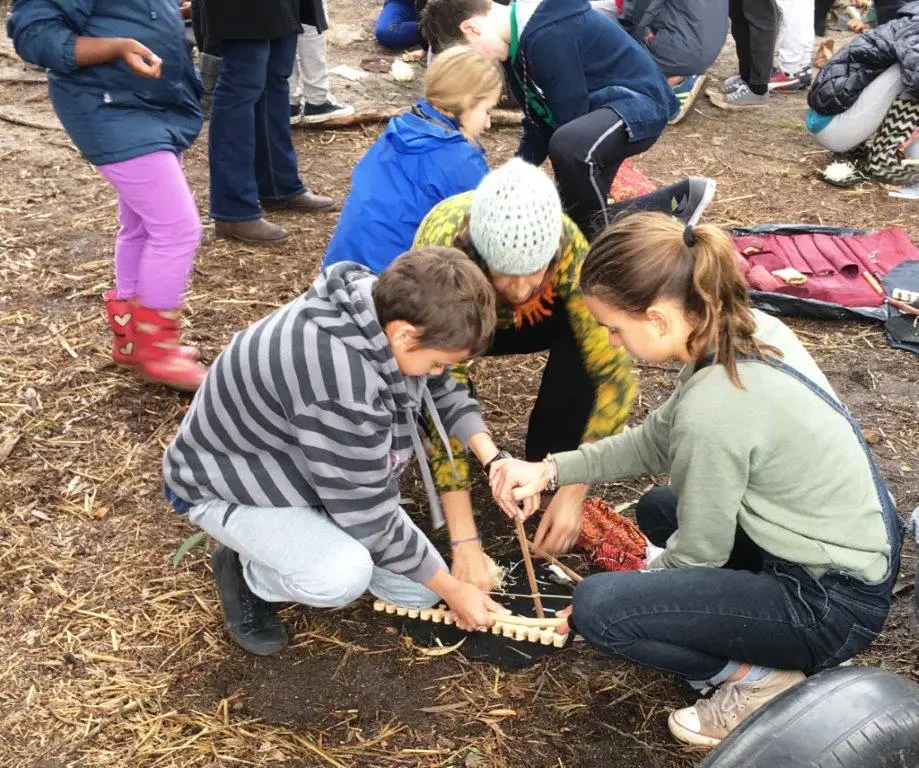


South African Fire Makers and Keepers
Bruce talks about Liesl Haasbroek
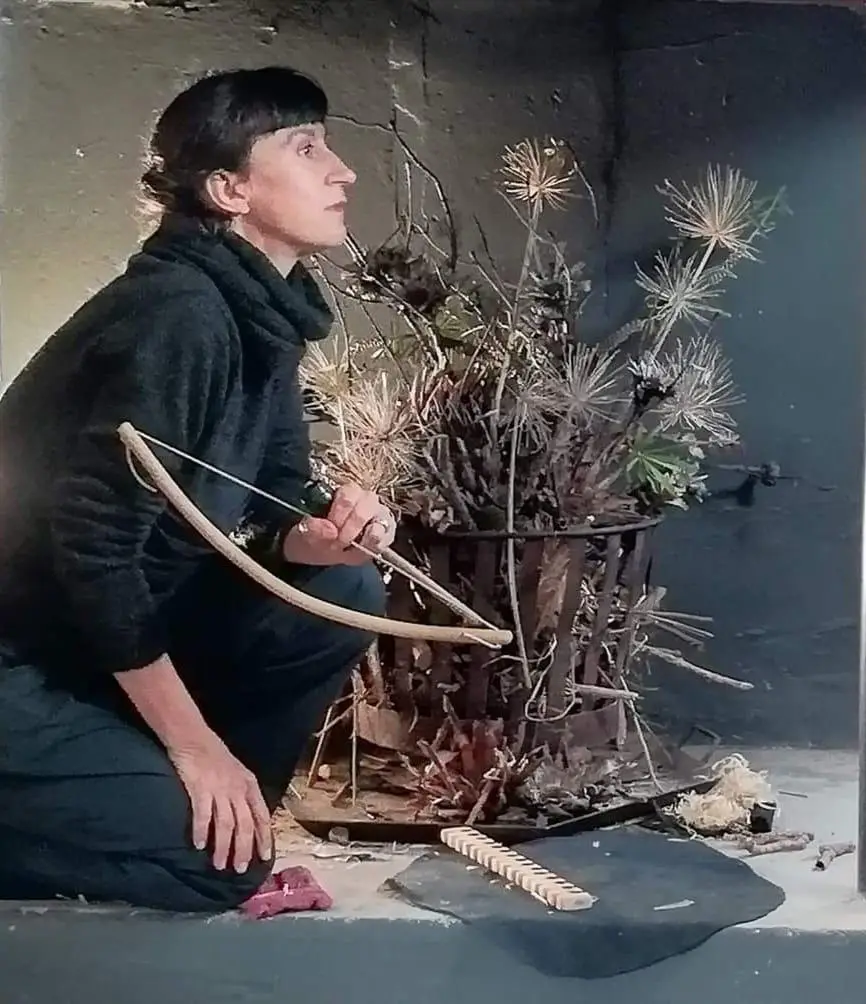

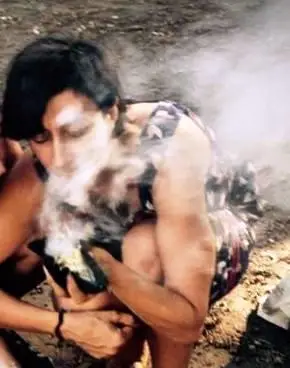


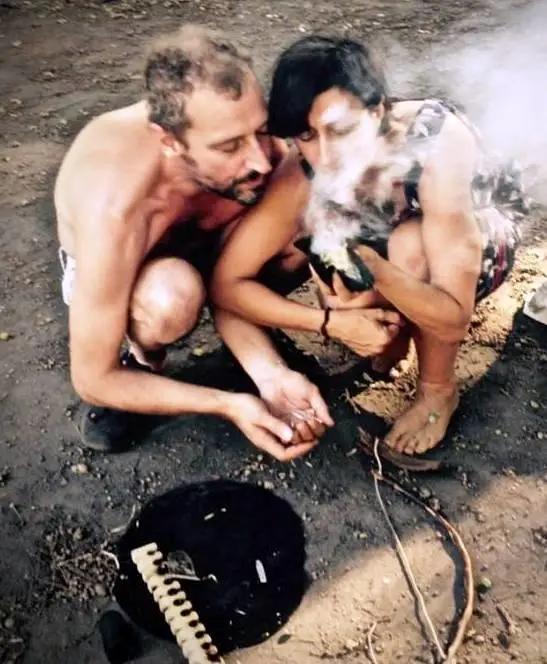
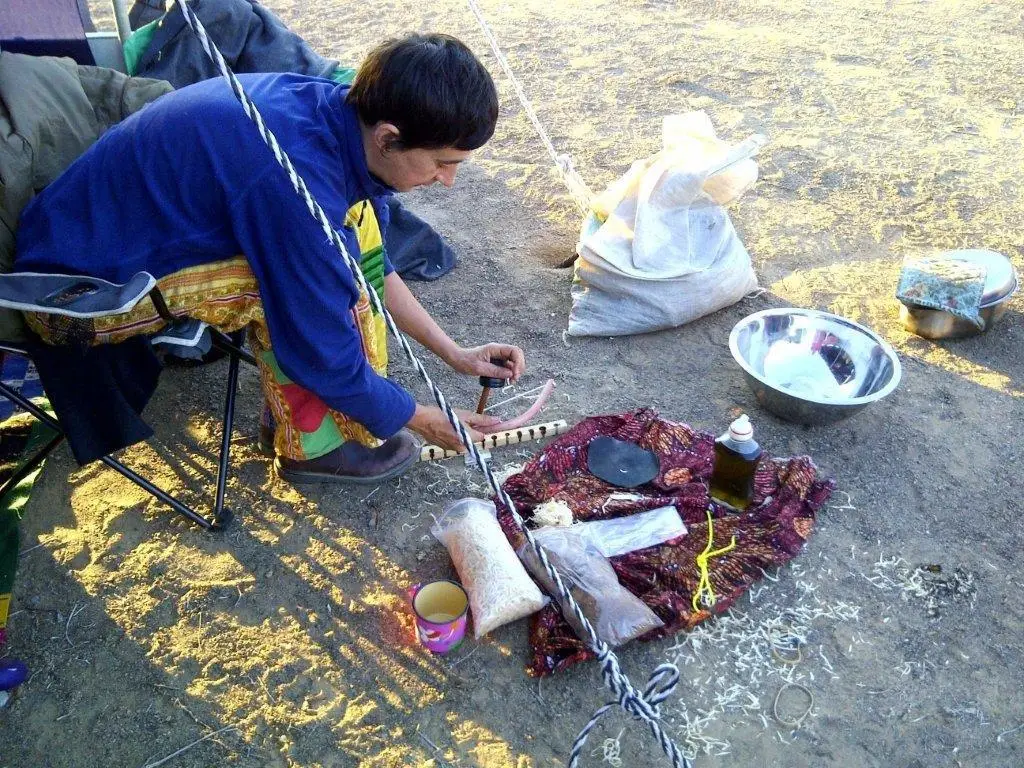
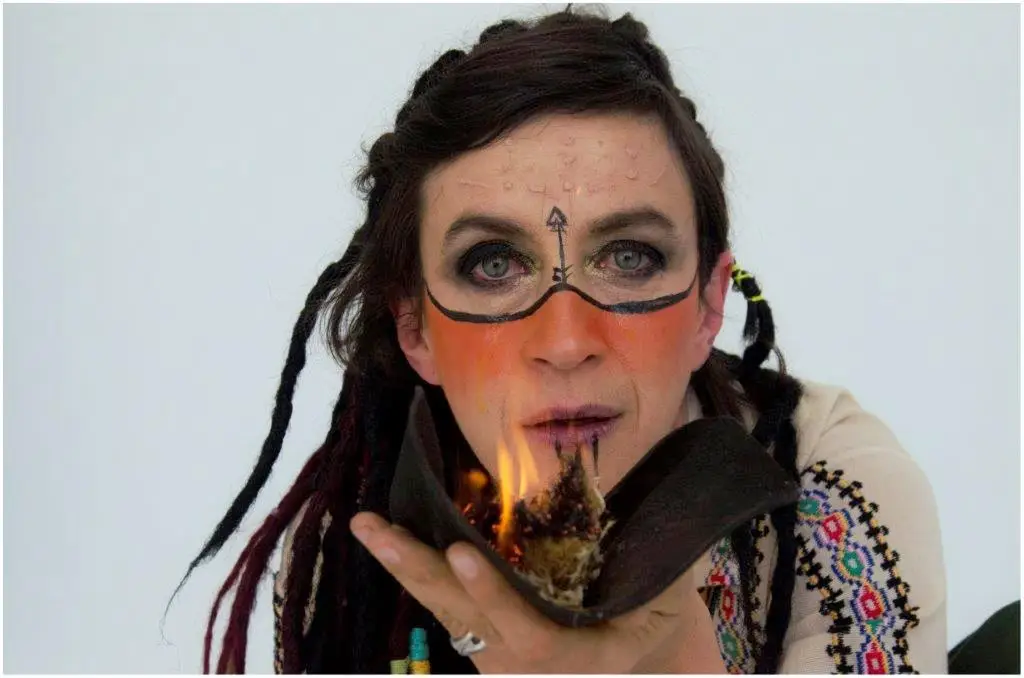


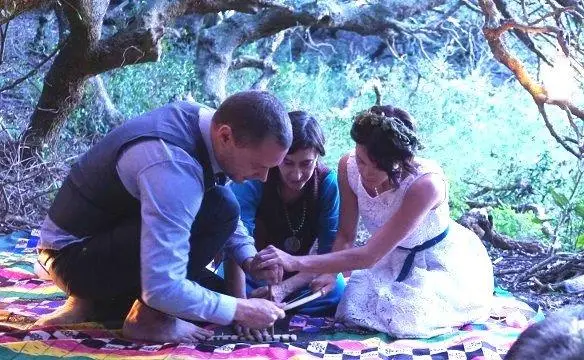

Liesl demonstrating the Primal fire
Primal Fire opening of the largest Labyrinth in Africa by Liesl Haasbroek by Bruce
VUVUZELA DIALOGUE – WITH FRANCIOS LE ROUX
Well now onto the Vuvuzela …..Long before the World Cup started and especially after the outcry it created during the Confederation cup in 2009, it was crystal clear that the instant a vuvuzela was thrown onto the field and used as a missile, it would almost certainly be sufficient justification for banning it… Read More Here
GREENPOP FESTIVAL FIRESHOPS INVITATION APRIL 2023
Fire: The Mother of All Elements
Fire embodies passion and desire, transformation and destruction, resurrection and hope, purification and even the forces of hell. It is the element that connects humanity to its ancient past while propelling us toward progress—a timeless metaphor for eternity.
We invite you to awaken the fire within by learning to create the Primal Fire through the pure forces of Nature—using friction as your guide. In this journey, you will explore how earth, air, and water converge in the making of fire, and how the principles of masculine and feminine energy unite to spark an ember—the very embryo of a fire.
Engage with this elemental teacher through ceremony, practice, and natural forces, and discover how fire can illuminate your life, ignite your potential, and transform your inner world.

Reigniting our shared heritage
Bridging the Divide Between Heritage Day and Braai Day—Like the Bushman
Bridging the Divide Between Heritage Day and Braai Day—Like the Bushman
Every year on Heritage Day, I encounter a spectrum of emotions—from irritation to frustration—about how this public holiday has, in many minds, assumed the one-dimensional persona of Braai Day, seemingly overshadowing the remembrance of past pain.
In an address marking Heritage Day in 1996, (former) President Mandela stated:
“When our first democratically-elected government decided to make Heritage Day one of our national days, we did so because we knew that our rich and varied cultural heritage has a profound power to help build our new nation.”
We recognised then that the struggles against injustice and inequality are integral to our national identity; they are part of our culture. We knew that if our nation were to rise—like the proverbial phoenix—from the ashes of division and conflict, we had to honour those whose selfless efforts and talents were dedicated to the creation of a non-racial democracy.
The word heritage itself derives from heir. It prompts reflection: how does one disinherit oneself? Can we choose to set aside parts of an inheritance? Recently, I encountered the notion that forgiveness is the choice to look upon someone—or something—with today’s eyes. In doing so, we create a future distinct from the past.
Where Heritage Becomes Living Fire
At what point do we begin to focus on the future in crafting a heritage—a legacy of love? Could it start, perhaps, around a fire on Heritage Day?
According to www.gov.za:
“Heritage Day on 24 September recognises and celebrates the cultural wealth of our nation. South Africans celebrate the day by remembering the cultural heritage of the many cultures that make up the population of South Africa. Living heritage is the foundation of all communities and an essential source of identity and continuity and plays an important role in promoting cultural diversity, social cohesion, reconciliation, peace and economic development. It is therefore important for South Africans to reclaim, restore and preserve these various aspects of living heritage to accelerate the use of living heritage to address challenges communities are facing today.”
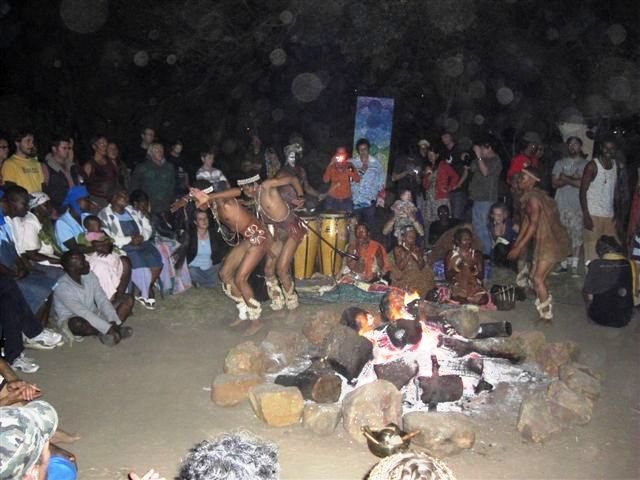
I suggest reclaiming a heritage of traditional fire making, transforming the fire of conflict into the fire of reconciliation. Across race, religion, region, language, or dietary preference, humans have gathered for 1.5 million years around fire and feast.
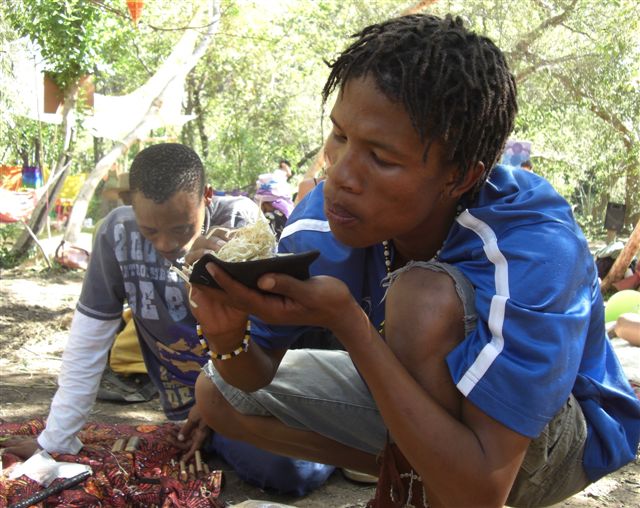
I have discovered at least one bridge to cross the divide of individual perspectives—and it comes in the form of creating fire like the Bushmen.
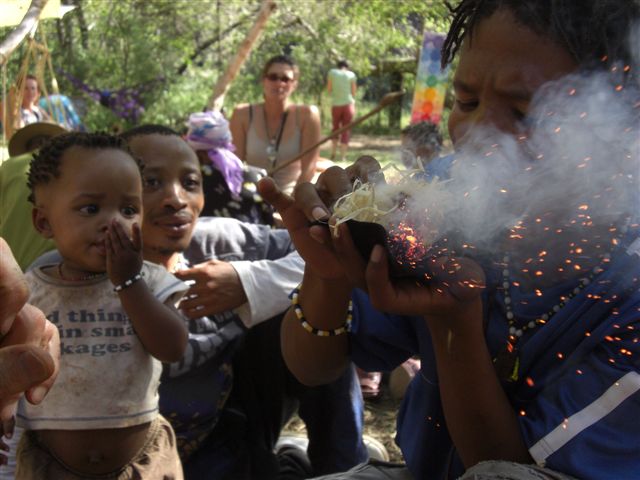
I was taught the bow method, which uses friction and the careful combination of different woods to create an ember. This ember is nurtured in kindling and blown into flame. Anyone can achieve this with a measure of will, a readiness to hear the call of the ancestors, and a simple fire kit.


Igniting Unity Through Friction and Flame
I have come to realise that the combination of a hard and a soft wood is a profound metaphor for how diversity can spark the ember of opportunity. The word friction comes from “to rub.” We can choose to focus on our differences and continue to create conflict—rubbing each other the wrong way—or we can learn to rub each other the right way.
This ancient fire-making method reminds me that friction is not an enemy, but a force of Nature. The two woods must be different in order to work together. The heat they generate gives birth to an ember—a living symbol of potential. That ember holds within it both possibilities: loving warmth or destructive fire. What follows depends entirely on its environment and the quality of air it receives.
When I place that ember in a nurturing nest of kindling and breathe life into it, my own life force transforms it into flame. From that flame, a phoenix of transformation may rise—shaped by my intention, vision, and will.
South Africa’s cultural heritage is immensely rich, but it is up to each of us—individually and collectively—to choose which parts of that inheritance we will carry forward. In doing so, we shape a legacy of acceptance and reconnection. Just as the word braai has been absorbed into nearly every southern African language, this simple act of gathering around fire has become a shared ritual of cooking, connecting, and community.
Wherever you are—at home or abroad—all South Africans are invited to light their fires and celebrate their heritage on this day. I invite you to ignite a phoenix fire—a flame around which we can dance the dance of diversity and unity.
We craft traditional fire kits containing everything you need to light your Braai Day fire in the way of the Bushman, bringing ancestral wisdom into your celebration.
To order your Bow Fire Kit (R350, free delivery in Somerset West), contact me at 082 807 7178 or moonfundi@gmail.com. (Hand drill kits are also available, though I recommend starting your journey with the bow method.) I also facilitate Fireshops—interactive fire-making experiences—for both children and corporate groups.
I leave you with my favourite fire mantra:
“When you walk into the fire of self-discovery, that fire will not burn you—it will only burn what you are not.”
May we remember that separation is an illusion, and may that illusion be burnt away in every flame kindled as an Original Fire.
(P.S. I recently learned that Archbishop Desmond Tutu is the patron of Braai Day—a fitting role for such a radiant, fiery spirit. I dedicate my traditionally lit Braai Day fire to his health and enduring light.)



By Roy Ashton
Wilderness Guide, South Africa
A Year of Hand-Drill Fires
Stories, Lessons, and the Spirit of Persistence
For the past year, I have taken on a deeply personal challenge: to create a hand-drill fire every single day for an entire year.
What began as a simple experiment soon turned into a profound journey of patience, connection, and discovery. In the reflections that follow, I share not only the practical lessons learned along the way, but also stories of inspiration—including encounters with the Kalahari Bushmen (!Ngate and Karoha, featured in The Great Dance) and another hunter-gatherer group still living close to the rhythms of the wild.
This account is for anyone intrigued by the art of traditional fire-making—whether you’re drawn to the craft itself, its meditative rhythm, or the deeper wisdom it awakens.
Feel free to browse, learn, and enjoy. I’d love to hear your thoughts and experiences—connect with me at royashton@gmail.com.
A Year of Hand-Drill Fires (5 August 2013 – 4 August 2014)
Total hand-drill fires made: 514
Number of fires in 2014: 460
Consecutive days of fire-making: 385 (without missing a single day)
Shortest time to produce a coal: Less than 7 seconds
Times a coal was made with one twirl: More than 10
Narrowest drill used: 6.5 mm
Widest drill used: 13 mm
Shortest time from start to visible flame: 43 seconds*
*Although this may not seem especially fast, I’ve never been interested in racing. The joy lies in each stage of the process—from coaxing the coal to nurturing the first flame.
Favourite tinders:
Shredded pine needles (frayed by vehicles along sandy roads)
Shredded poplar/cottonwood inner bark
Shredded juniper inner bark
Fine, dry grass
Number of successful stem/drill woods: 13
Number of woods attempted: Approximately 15
Number of successful board woods: 7
Typical number of twirls to form a coal (on easy woods): 3–6
Preferred drill length: 50–60 cm
Shortest successful drill: 25 cm
Longest successful drill: Over 100 cm
Most hand-drill fires made in a single day: 8
Tribes and groups taught (hand-drill or bow-drill):
isiZulu, Lozi, isiXhosa, seTswana, Shangaan, //Khomani San, Hadzabe, Nama-Griqua, seSuthu, and various non-African nationalities.
Each encounter has deepened my respect for fire as a universal teacher, reminding us that, across all languages and traditions, the spark of an ember continues to connect humanity.
The Magic of Fire & Connection
There’s something timeless about the glow of an open fire — whether in a cosy fireplace or under the stars around a campfire. Everyone feels its pull.
This past year, through my journey of making a hand-drill fire every single day, I’ve come to see fire as more than just warmth or light. It’s become a teacher — helping me reconnect with my passions, grounding me, and reminding me of the quiet strength that comes from simple, ancient skills.
Each spark has deepened my sense of connection — to people, to nature, and to those who came before us. Fire transcends culture and language; it silently links us to our ancestors and to the timeless magic of being human on this great earth.
Now, the smell of woodsmoke on my fingers isn’t just nostalgic — it’s part of daily life. This practice has helped me stay humble and centred, bringing my wild heart into the rhythm of city life. As Tom Brown says, it’s a step closer to our birthright: that deep, natural connectedness with earth and spirit.
A Year of Fire & Perseverance
My goal was simple but ambitious — to make a hand-drill fire every day for a year.
During the first six months, I missed a few days — sometimes because my hands were too blistered, or because I ran out of suitable wood while travelling. To make up for it, I challenged myself to create multiple fires on other days.
Eventually, I decided to push further — not just 365 fires, but 500. It meant averaging more than one fire per day, and after a long year of sore hands and determination, I reached my goal with 10 days to spare.
Between 5 August 2013 and 4 August 2014, I made over 500 fires. I then continued for the rest of 2014, completing a full year of daily hand-drill fires — around 460 in total for that year alone. It was a journey of endurance, discipline, and deep learning through fire.
Making Fire, Not Just Coal
My goal was simple but ambitious — to make a hand-drill fire every day for a year.
During the first six months, I missed a few days — sometimes because my hands were too blistered, or because I ran out of suitable wood while travelling. To make up for it, I challenged myself to create multiple fires on other days.
Eventually, I decided to push further — not just 365 fires, but 500. It meant averaging more than one fire per day, and after a long year of sore hands and determination, I reached my goal with 10 days to spare.
Between 5 August 2013 and 4 August 2014, I made over 500 fires. I then continued for the rest of 2014, completing a full year of daily hand-drill fires — around 460 in total for that year alone. It was a journey of endurance, discipline, and deep learning through fire.
The Humbling Magic of Hand-Drill Fire
At the Tom Brown School and Wilderness Awareness School, there was a lot of superstition surrounding friction fires—the idea that you must always pray for help, and that some days, you are simply “not meant to get a fire.” I believed this while I was at WAS.
After a year of practising hand-drill fire every day, I can say that yes, this skill can crush your ego. Even after months of daily practice, there are days when it is extraordinarily difficult, and I can’t figure out why—everything seems the same as before, even the humidity. Yet, as long as I have chosen my woods properly, kept them dry, prepared the hole and notch correctly, and had dry tinder—in other words, as long as all the physical factors are in place—I have always been able to make a fire, even if it sometimes takes several attempts. It has been humbling at times, and there have indeed been days when I have prayed through sheer frustration. Other days, coals emerge after just two or three twirls, and I wonder what all the fuss was about. Through it all, the practice has kept me humble, focused, and continually in awe—it is still magic every time.
For me, hand-drill fire-making is a deeply sacred and beautiful skill. I love it, and it has not grown old even after a year of daily practice. Each day brings excitement at whether a coal will emerge, frustration when something goes wrong, joy when the ember glows, reverence when I blow on the tinder, and thanksgiving when the flames appear. Everyone who witnesses it for the first time is moved, regardless of their background. When the ember is held up and blown into flame, many exclaim, “It looks so spiritual,” even if they don’t consider themselves “that kind of person.” And of course, everyone wants a turn!
Teaching hand-drill raises important ethical questions for me. On one hand, I love sharing the skill. On the other hand, it is a special, hard-earned craft, and I am hesitant to simply “give away” the secrets I have spent years mastering. When taught correctly, some people can produce a coal on their very first attempt, provided the right woods, stems, and posture are used. (And it’s not only burly men—many women succeed immediately.) But I wonder: does this make the skill seem too easy? Does it reduce the sense of value that comes from the effort required? I am curious to hear others’ thoughts on balancing accessibility with respect for the art and discipline of this ancient practice.
The Floating Technique & the Elusive Creator’s Fire
It took me months to achieve my first coal using only the floating technique. The challenge lies in generating enough downward pressure without your hands sliding down the stem. Eventually, I succeeded. I’ve found that while the method is slower, it can work very effectively with certain woods.
Floating is also a useful way to “warm up” a set or to begin building the friction dust before finishing with one or two firm downward twirls to ignite the coal.
At the time of writing, the legendary “Creator’s Fire” hand technique remains elusive to me. This method, described by Tom Brown, involves “reversing” the ordinary hand-drill technique so that your hands float only upwards along the stem, in a gesture of prayer to the Creator. I have attempted it on very easy woods and came close to producing a coal, but the process proved very harsh on my hands. It remains a personal ambition to one day achieve a true Creator’s Fire.
Experimenting with Woods and Techniques
For months, I practiced using the easiest woods I could access — Commiphora and Fig — pairing small drill-bits fitted with bamboo joints to long, straight, and smooth stems of other woods. I could have experimented more broadly, but my hands were constantly holding me back, blistered and sore. Perhaps my technique was not perfect; it may be possible to make hand-drill fires frequently without extreme blisters. But every single day? That proved a formidable challenge. If anyone has found a method, I’d love to hear about it.
Eventually, I felt ready to try other woods and to source stems from trees with naturally straight growth. In the Cape Town area, such woods are scarce, and those I could find often failed to produce coals. The woods I had brought from the Bushmen in the desert were particularly difficult to work with in Cape Town’s rainy, humid winter climate.
During a trip to the UK, I collected a variety of woods — some recommended by friends, others suggested in Ray Mears’ books. Mullein, for instance, grows in the UK, and I found some near my parents’ village. Big-leaf Maple, a favourite from Seattle, was absent. Ultimately, I achieved success with 13 different species for the stem and 7 different woods for the board. I am happy to share details, including which woods performed best, to anyone interested.
Among the Northern Hemisphere species I tried, Elder and Mullein were my favourites. English Sycamore (Acer pseudoplatanus) and Poplar (Populus sp.) worked but were less reliable. Domesticated fruit fig (Ficus carica) produced good results but was particularly harsh on my hands, even with smooth stems.
Interestingly, some woods that perform exceptionally well with the bow-drill — like African Marula and Western Redcedar — did not work well for hand-drill in my experience. I even tried commercially processed Redcedar without success, which was surprising and somewhat frustrating.
The Daily Magic of Fire
Everyone knows the magic of an open fire—whether in a cosy indoor fireplace or under the stars around a campfire. Its appeal is universal.
This year of befriending fire, by making a hand-drill fire every day, has helped me reconnect more deeply with my own passions and given me confidence in a timeless skill. It is a skill that inspires and unites people across cultures, and even without words, links us to our ancestors and the enduring wonder of being human on this earth.
Practising this skill daily has become an anchor in my life, giving me something to anticipate each day. It has helped me stay grounded, remain humble, feel strong, and carry my wild heart into city life. The smell of woodsmoke on my fingers is no longer merely romantic—it has become part of my daily experience. Hand-drill fire-making brings me closer to what our ancient ancestors, and contemporary hunter-gatherers, knew—closer to what Tom Brown calls our “birthright”: a profound sense of connection with both earth and spirit.
Favourite Woods and Dimensions – What I Learned
For most of the year, I relied heavily on two African woods: Commiphora (Corkwood or Myrrh) and Sycamore Fig (Ficus sycamorus). These woods are fantastic — reliable, relatively easy to work with, and capable of producing coals very quickly. My personal records are mostly with these two: my fastest coal was made in under 7 seconds with a single twirl down a long, straight fig wood stem.
Domesticated fruit fig trees (Ficus carica) can also be used for hand-drilling, but they are more difficult than African wild fig wood (Ficus sycamorus).
When straight stems of the right wood were unavailable, the Kalahari Bushmen and other peoples would attach a small sliver of the desired hand-drill wood to the tip of a straight, smooth stem from a different tree. I adopted this technique as well, since I rarely had pieces of Commiphora or Fig long or straight enough to make a full hand-drill stem. A particularly clever adaptation I’ve used comes from a YouTube video by JungleCrafty, where he demonstrates a detachable hand-drill stem/drill-bit system using bamboo. This method allows you to swap drill bits easily while continuing to use your favourite straight stem — no binding or glue required — and it works brilliantly.
After experimentation, I found my favourite stem diameter to be around 12 mm, which fits my hands comfortably. The drill-bit (tip) works best slightly narrower, around 8–10 mm; wider tips require too much effort, while narrower ones drill through the board too quickly.
The board thickness also affects performance: too thick makes the drill harder work, while too thin lets you drill through before forming a coal. My preferred thickness is between 7 mm and 15 mm.
Stem length is another important factor. Some hunter-gatherers I observed use extremely long stems — over a metre — to make fires standing up. Long stems make it much easier to form coals, and most of my one-twirl coal successes came with longer stems. However, very long stems are cumbersome and feel almost like “cheating” to me. My personal favourite lengths are 50–60 cm, with 40 cm still workable. My record for the shortest stem was 25 cm (10 inches), using the floating technique with a mullein stem. While shorter stems are possible, my goal was never to set records, but simply to make a fire every day.
The Trials and Triumphs of Daily Fire
When I returned to the city — living in the centre of Cape Town — I realised I had achieved my goal of making a hand-drill fire every day for a month, as well as several with the Bushmen. I decided to continue daily practice and see how long I could sustain it. Initially, my goal was only until Christmas, but at some point, I set my sights on a full year of hand-drill fires.
The biggest challenge was my hands. Constant blisters made life difficult — at times so painful that I could barely drive, gripping the steering wheel only with my fingertips. My hands bore the marks of the practice all year: dark purple blood blisters, peeling skin, and eventually raised yellow calluses that looked almost like large warts. These calluses would burn, burst, and start the cycle over again, each time taking longer to heal as the skin thickened and the purple blisters deepened.
Eventually, my calluses settled slightly after I eased up on the pressure and used the easiest woods for several weeks. My “fire-starter” hands are even featured in an upcoming photographic book on hands, showcasing people from a variety of occupations. If anyone is curious to see photos of my blisters at various stages (and has a strong stomach!), feel free to email me.
Strength was another challenge at first — my arms tired quickly — but muscles adapt over time. What didn’t adapt so quickly was the skin on my hands. One of the most important lessons I would share with anyone attempting a hand-drill challenge is: take it slow. Stop before blisters form. Recover from “hot spots” promptly; blisters, by contrast, can take weeks or even months to heal and are painful while doing so. Rushing the process only slows progress.
I also learned that there’s no shortcut to toughening skin artificially. Stories about applying surgical spirits, methylated spirits, or other treatments don’t seem to make much difference. The body builds toughened skin naturally with time. (Update February 2015: even after 18 months, mine were still peeling and blistering!)
Harvesting and Preparing Hand-Drill Sets in the Kalahari
While in the Kalahari with the Bushmen, I spent countless hours harvesting, stripping bark, and straightening hand-drill sets. I wanted to ensure I had enough sets to last a long time, and also enough sticks of the right woods to teach others when I returned home. The Bushmen in our camp watched me quizzically, surely wondering how many sticks I actually needed! Ngate explained that one of their hardwood hand-drill stems might last up to five years, yet here was this young Englishman making twenty fire-stems — was I crazy?
Perhaps I was. I haven’t even worn down one of them. But that is mostly because the hand-drill woods the Bushmen showed me are among the most challenging I have ever worked with. These stems were tough on my hands, produced very little dust, and seemed to work only in extremely dry weather. (2015 update: Towards the end of my hand-drill year, I began achieving regular and reliable success with the Kalahari woods — perhaps I simply needed to refine my technique.) Nevertheless, in their Kalahari habitat, these woods are effective and reliable. Easier hand-drill woods do not appear to grow in that region.
The specific woods Karoha and ! Ngate introduced me to included Grewia retinervis (one of the “Raisin bushes”), Trumpet thorn (Catophractes alexandri), and a plant resembling evening primrose, called !am!ene.
(For non-South African readers: signs such as /, //, and ! represent clicks in Bushman click languages. Karoha and //Twasi speak! Gwi, while! Ngate speaks! Xo…)
Learning from the Masters in Karoha’s Village
You can imagine my excitement when we arrived in Karoha’s village in Botswana, and he agreed to take me and a friend into the bush to demonstrate how his ancestors used to make fire. He and //Twasi brought only a knife. We wandered a short distance from our camp, and the two men cut stems from a living bush — wet, green wood. I wondered, when would these stems be ready?
They stripped the bark off, straightened the stems by hand, and left them on the hot sand for a short while as they gathered tinder — a very specific type of fine, dry grass. They also cut a fire-board from the same Grewia bush, selecting a dead branch for this purpose.
Then they began twirling the green stem on the dry board. Of course, this was not easy: the wood had to dry out through its entire width before any coal could ignite. Karoha, now in his fifties, is affected by poor health due to malnutrition imposed by Botswana government policies, including eviction from traditional lands and hunting restrictions. He mentioned wanting to run the Persistence Hunt again, but acknowledged he wouldn’t have the strength without better nutrition. //Twasi, in his 80s or 90s, remains remarkably strong, despite being blind in one eye from a trapping accident involving a steenbok.
The two men took turns twirling the stem, resting only briefly before continuing. I watched in awe, convinced they might fail — wet green wood is notoriously difficult. Yet, their endurance and strength were astonishing. After at least half an hour, possibly more, they eventually produced a coal and blew it into flame in the dry grass. We cheered.
They then used the small fire to dry and straighten additional sticks, creating a few fire-sets, some of which they gave to me and my friend, with pre-carved notches. Interestingly, they sometimes carved two notches on either side of the narrow board, likely as a precaution: if the hole migrated while drilling, at least one notch would catch the dust and form a coal.
Finally, the moment I had anticipated for months arrived: they offered me a turn. I leapt at the opportunity. My job was easier than theirs — the right wood was already selected and dried by their efforts. Still, it was hard work, and I managed a coal in about six twirls, thanks to everything I had learned about applying downward pressure. I knew I was “standing on the shoulders of giants”, benefiting from their earlier labour.
A few days later, practising hand-drill with Ngate in camp, I gave myself massive, raised blisters on both palms, forcing a short break from my daily hand-drill routine to recover.
There were many other stories, but this one captures the essence of learning hand-drill fire from the masters.
Building Skill & Calluses: Preparing for the Kalahari
I had been practising the hand-drill technique for a couple of months, almost every day, trying to toughen my hands, which have always blistered terribly. Initially, I could twirl the stem for only a few seconds before my palms burned, so I patiently stopped and waited until the next day, slowly building up calluses. At that point, I had not yet succeeded in making any coals, but at least I was developing the skin toughness necessary for the work ahead.
I then went away for a month to lead wilderness trails in Umfolozi Game Reserve. When I returned, all my calluses had disappeared, and I had to start over. However, Louis pointed out — drawing on his understanding of physics — that the key to hand-drill success is pressure, not speed. With this insight, I suddenly began making consistent hand-drill coals.
My first breakthrough involved using a string looped over my thumbs and anchored in the notch at the top of the hand-drill stem. By twirling the stem while pulling down hard with my thumbs, I could greatly increase the downward pressure, which allowed me to achieve my first coal in South Africa. Soon after, I abandoned the string and refined my hand-twirling technique without it.
By this time, I had just one month before our trip to visit Ngate, Karoha, and Twasi — three of Louis Liebenberg’s Bushman friends in the Central Kalahari, all certified Master Trackers. I set myself the goal of making consistent hand-drill fires before visiting the Bushmen, so that we could practise together in the Kalahari and I could learn which woods they used, making my own sets under their guidance.
To prepare, I made a hand-drill fire every day for a month, primarily using Commiphora (Myrrh) wood, also known as Corkwood — a traditional wood used by Bushmen, growing in the warmer northern parts of South Africa.
From Curiosity to Commitment: My Bushmen Journey
It was only in 2013 that I truly committed to practising hand-drill regularly. I had been offered a once-in-a-lifetime opportunity to visit the Bushmen with Louis Liebenberg, founder of the CyberTracker Evaluation system and author of several books on tracking. This chance was the motivation I needed to take hand-drill fire-making seriously.
Louis had learned extensively from his Bushmen friends in Botswana, whom he first met in the 1980s when some were still hunting with bows and arrows. Years later, he introduced them to filmmakers documenting the Persistence Hunt. These Bushmen —!Ngate and Karoha, the stars of The Great Dance, became central to the story. Louis also introduced them to David Attenborough’s film team, and there is an incredible clip of Karoha hunting a kudu, available on CyberTracker.org.
Among other roles, I now work as a Wilderness Guide in South Africa, teaching bow-drill fire-making to visitors from around the world, as well as to people from a variety of African tribes who have lost the knowledge of friction-fire over the past couple of generations.
In 2012, I set out to find the last full-time wild hunter-gatherers in Africa and live with them for as long as I could afford. I was fortunate to find one tribe member who spoke some English and agreed to be my guide. I spent a month living in the bush with them – hunting most days, gathering on others, and spending long hours relaxing in camp.
Matches were scarce, and almost everyone relied on hand-drill fire. Whenever we went hunting, the men carried their hand-drill stem in one hand alongside their arrows. Each time they wanted to smoke tobacco or marijuana during breaks, they would make a coal with the hand drill. For city folk, this would seem impossible – yet for them, it was second nature.
I met an elder named Saidi, who could produce a hand-drill coal in just two or three twirls down a long stem. He didn’t even realise it; when I pointed it out, he simply smiled.
The younger boys in the camp were equally eager. The older teens quickly mastered the technique, while the very young ones took turns twirling the stem. Even the three-year-old was determined to try – a stark reminder of how cultural disruptions, including early exposure to tobacco, marijuana, and alcohol, were already affecting the community.
During my time with them, I also practised making hand-drill fires with their native woods and was pleased to succeed. I created a bow-drill set to demonstrate to the group. Everyone was amazed, having never seen one before, and eager to try it themselves. However, the novelty soon faded – bow-drill requires more equipment, whereas the simplicity of two sticks for hand-drill remained the preferred method.
First Sparks: Learning Hand-Drill Fire in the USA
About 15 years later, I met Richard Dart in Colorado. He spoke of “The Good Red Road” and sought to guide his students toward becoming what he called “wild, free-roaming human beings.” Under his guidance, using his sticks, I made my first hand-drill fire in 2003, employing a mullein stem on a yucca board. I couldn’t produce fires consistently at that stage, and my hands ended up with terrible blisters, but the experience was thrilling. I became so captivated that I practised inside my bedroom – on the carpet – and after filling the room with smoke, I accidentally melted a sizeable section of it. Inexplicably, the landlord overlooked it, and I wasn’t charged for a replacement.
During the five years I spent in the USA, I made hand-drill fires only about 10–15 times. This included two years at the Wilderness Awareness School community in Duvall, Washington, where I focused primarily on bow-drill techniques and gradually became proficient.
The First Flicker: Childhood Experiments with Fire
I first encountered the idea of “making fire by rubbing sticks together” as a small child in a quaint village in England. Naturally, I wanted to try it. Following a diagram in John Wiseman’s SAS Survival Handbook, I attempted to replicate the process—only to find the proportions wrong, the notch misaligned, and the hand movements completely impractical. Despite my best efforts, the wood only grew warm; no ember appeared.
Even so, the challenge thrilled me. I still vividly remember the texture of the wood, the position I sat in my parents’ garden, and the intense anticipation of coaxing life from lifeless sticks. That early curiosity planted a seed, a fascination with fire that would guide me through years of learning, failure, and eventual mastery.
Honouring Arthur Albertson with Heartfelt Thanks
Bruce's Primal Fire Stories
Bruce talks about Natural Fireworks
Fire Poems
Always There Was Fire
Always there was fire
In our primaeval past, fire protected us from our greatest fears, both real and imagined
In the darkest caves where once we trembled and shivered, fire now gave us strength
By the light of fire, we created
Through the light of fire, we drew supremacy over nature, for no longer were our waking hours prescribed by the rising and the setting of the sun
Always there was fire, especially the fire within our souls
What has made us who we are today is the burning desire to succeed, to prevail against all odds
This is the fire of our passion
When we ignite our internal or external fires with this passion, no amount of darkness can hide this light, and everyone will come to watch
Fire - by Judy Brown
Although fire-making should be one of the most satisfying of all human acts, for most people it is quite unremarkable, like breathing.
Fire’s first whisper of nostril-biting smoke conjures up images of our ancient ancestors passionately coaxing smouldering embryonic embers from wood-twirled twigs or sparking flames from flint-struck sparks.
What makes a fire burn is space between the logs, a breathing space … too much of a good thing, too many logs packed in too tight, can douse the flames almost as surely as a pail of water would.
So building fires requires attention to the spaces in between, as much as to the wood.
When we are able to build open spaces in the same way, we have learned to pile on the logs … then we can come to see how it is fuel and the absence of fuel together that make fire possible.
Excerpts from Chapter 16: Fire in Our Heart
from “The Bushman Winter Has Come” by Paul Myburgh, Penguin Books, 2013
“In my warmed blood, I know how it was in that dawning of time when early humans first made fire. It was in that moment of recreation of the sun that we became co-creators.
In that moment was born our first glimmering awareness of the forces of creation and life. The sun had always been the giver of life, and now we humans could create light and life just as the sun does. In that first making of fire, we gave birth and breath to the primal idea of co-creator and Self … the first inadvertent awakening of human consciousness.
In that first enormous act of co-creation, we became aware of something greater than ourselves … the whispered beginnings of a God-consciousness on earth as it is in heaven.
So in the light of the first fire, we extended ourselves through the universe and to the heart of the sun itself. In our acknowledgement of this relationship, we extended the idea of ourselves from earth to infinity in the greater cosmos. This is the way it is in a qualitatively expanding universe: our idea of God is always just beyond the outer reach of human perception. And this was the first primitive perception of the feeling of God in a sleeping humanity … a thought-feeling which even now lies just beyond the furthest boundary of human consciousness”.